

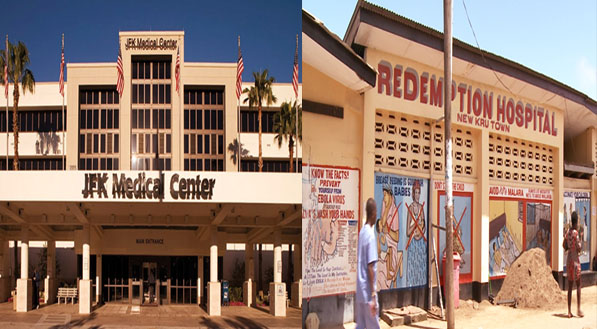
“If You Want To Die, Go To JFK, Redemption Hospitals”
By Godgift Harris

By Godgift Harris
Public confidence in government-run hospitals have faced one of its most serious tests, as patients and their families have also accused them of “negligence, indifference and systemic failures.”
Two of the most prominent public health facilities that have come under foci, are the John F. Kennedy Medical Center (JFK) and the Redemption Hospital.
Across Monrovia and parts of Montserrado County, a growing chorus of citizens has described their experiences at these hospitals, not as lifesaving interventions, but “death traps.”
The phrase, though harsh and deeply unsettling, reflects the depth of frustration and grief among families, who claimed their loved ones “suffered or died under circumstances that could have been prevented.”
At JFK, long regarded as the premier referral hospital, located in Sinkor, the facility has historically served as the backbone of tertiary healthcare delivery in the country.
Today, however, it finds itself at the heart of public anger.
“If you want to die, go there”
One of the most emotional accounts came from one Musu Sumo, who spoke to reporters outside the JFK compound earlier Thursday, March 5, fighting back tears, she did not soften her words.
“If you want to die, just go to any of the government-run hospitals, namely: JFK and Redemption in New Kru Town, where doctors and nurses have no patient care. Some of them are always on their phones playing games or on Facebook, while patients are dying in agony.”
Madam Sumo’s statement, though sweeping, echoes complaints shared by several other families interviewed at the two health facilities.
They described long waiting hours without medical attention; limited communication from healthcare workers, and lack of urgency in emergency situations.
One relative alleged that when his family member’s condition deteriorated, calls for assistance went unanswered.
“We were shouting for help, but nobody came. By the time they responded, it was too late.”
Such accusations, if substantiated, raise questions about professional ethics, hospital supervision, and overall accountability within the public health sector.
At Redemption Hospital in the Duala community of Bushrod Island, frustrations remain equally tensed.
Several residents described overcrowded wards, patients seated in chairs while receiving treatment due to limited bed space, and shortages of essential supplies.
“Redemption is completely a death trip,” one resident said bluntly.
“We are telling our people to be very careful with JFK and Redemption Hospital.”
While such statements are emotionally charged, they reflect a perception crisis that authorities cannot afford to ignore.
Allegations of divided loyalties
Beyond claims of inattentiveness, some patients made more troubling allegations that certain doctors and nurses, who work in public hospitals, operate private clinics, and redirect patients there for treatments.
According to multiple accounts, patients who cannot afford private fees, sense being sidelined within public facilities.
“If you don’t have money to tip the nurses, you are on your own. They will tell you to go to their clinics,” one confused looking man alleged.
These allegations remain unverified, but if proven true, they would represent serious ethical violations and conflicts of interest.
Healthcare professionals are bound by codes of conduct that prioritize patients’ welfares above personal financial gain.
Medical ethics experts argue that even the perception of such practices can severely erode trust in public institutions.
While JFK and Redemption administrations are yet to speak to frustrations, public anger is mounting, but some healthcare workers have acknowledged that the system itself is “struggling.”
For now, as patients continue to sit in crowded corridors and families anxiously await medical updates.
To restoring trust will require more than statements.

Comments are closed.