

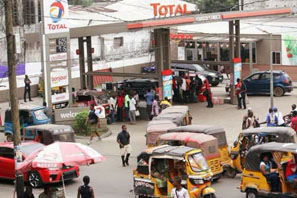

Government has announced an increment in the prices of petroleum products, but it has also shifted blamed on the crisis in the Middle East for the increment.
The announcement has raised concerns over the possible impact on transportation fares, household expenses, and the cost of goods, and services.
The Ministry of Commerce and Industry in consultation with the Liberia Petroleum Refining Company (LPRC) said, the new petroleum price ceilings take effect on Wednesday, September 16.
Under the new structure, gasoline, commonly known as PMS, increased by US$0.45, while fuel oil, or AGO, rose by US$0.50 per gallon.
The Ministry set the wholesale price of gasoline at US$5.30 per gallon, with a retail pump ceiling of US$5.58, equivalent to approximately L$985 using the exchange rate referenced in the circular.
For fuel oil, the wholesale price has been set at US$6.62 per gallon, while the retail pump ceiling is US$6.90, equivalent to about L$1,220.
The new figures represent another upward movement in petroleum prices.
The increment is likely to generate renewed concerns among commuters, and commercial operators, “because transportation, and other essential services depend heavily on fuel consumption.”
Higher fuel costs can also increase business expenses, and place additional pressure on the prices of basic commodities.
The Ministry referenced the Central Bank of Liberia’s September 1, exchange rate of L$176.49 to US$1 when calculating the Liberian-dollar equivalents of the new pump ceilings.
However, the circular does not announce specific measures to cushion low-income households, or businesses from the effects of the latest increase.
Authorities said, their inspectorate team will closely monitor petroleum stations to prevent “arbitrary increases above the approved ceilings.”
The Ministry also warned that it would monitor market practices to ensure petroleum importers do not undercut competitors.
While the government’s price-monitoring measures are intended to promote compliance, the major concern for consumers is whether the latest fuel increase will eventually trigger higher transportation fares, and further increases in the prices of food, and other essential services.
The latest adjustment has meanwhile, placed renewed attention on government’s responsibility to explain the factors driving fuel-price increases, and ensure that approved ceilings are respected.
Meanwhile, Information Deputy Minister for Press and Public Affairs, Daniel Sando, has shifted blame on Middle East for the rising global crude oil prices, production constraints, and disruptions along major shipping routes.
Sando said, the crisis has increased procurement costs for imported petroleum products, and placed additional pressure on consumers.
At a press briefing in Monrovia on Thursday, September 17, Sando said, the international petroleum market remains highly volatile, with Brent crude recently trading above US$100 per barrel amid disruptions affecting global oil supply, and transportation.
The situation, he said, has significantly increased the cost of refined petroleum products, particularly gasoline, and diesel, with the impact being felt across the United States, Europe, and several African countries including Liberia.
Recent international market reports have also documented elevated crude, and diesel prices linked to supply disruptions, and geopolitical tensions.
For Sando, Liberia as a net importer of petroleum products, is particularly exposed to fluctuations in international prices, shipping costs, and the availability of refined products on the global market.
He noted that the effects of the global situation have also been evident, including pressures on the domestic supply of petroleum products.
Current market data places Liberia’s retail gasoline, and diesel prices at elevated levels, although pump prices can vary by source, and location.
Sando said, maintaining a reliable, and stable supply of petroleum products requires continuous coordination among key stakeholders, including the government, the Ministry of Commerce, petroleum importers, and other relevant institutions.
He added that government will monitor international oil prices, shipping routes, product availability, and national petroleum stocks in expectation of market disruptions, and maintain a stable supply of fuel on the market.

Comments are closed.