

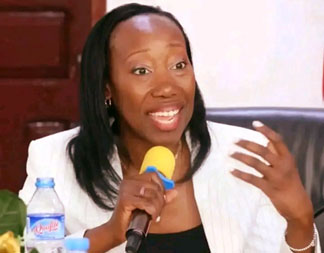

Liberia could unlock one of its greatest economic opportunities by investing more in women, and expanding their access to financial services, with the country’s Gross Domestic Product (GDP) projected to grow as much as 30 percent if gender equality in the financial sector is achieved, the World Bank Group has revealed.
World Bank Group Country Manager for Liberia, Georgia Wallen, made the disclosure on Wednesday, July 29, during the National Conference on Women’s Financial Inclusion.
Madam Wallen said, empowering women economically, is not only a matter of equality, but a strategic investment that could transform the economy, create jobs, and lift families out of poverty.
Liberian women, she said, remain the backbone of the agricultural sector, producing approximately 93 percent of food.
Despite their enormous contribution, they own only 27 percent of businesses, and continue to face challenges in accessing bank accounts, credit facilities, and other financial services needed to expand their enterprises.
Madam Wallen said, closing this financial gap would substantially increase women’s contribution to national economic activity, strengthen household incomes, stimulate entrepreneurship, and accelerate inclusive economic growth.
Madam Wallen described women’s financial inclusion as a critical pillar of the government ARREST Agenda for Inclusive Development, and Vision 2030.
She reaffirmed the World Bank Group’s commitment to support reforms, and investments that improve access to finance, especially for women operating small businesses in both urban and rural communities.
Madam Wallen emphasized the need for digital technology that would open new opportunities for women by connecting them to financial institutions, mobile money services, and wider markets.
“These innovations are helping women transition from cash-based businesses to formal financial systems that provide greater security, and opportunities for expansion.”
Madam Wallen highlighted the Liberia Women Empowerment Project (LWEP), implemented by the Ministry of Gender, Children and Social Protection, as one of the most impactful initiatives.
Over the past three years, the project has supported hundreds of women entrepreneurs in more than 450 communities through financial literacy programs, village savings, and loan associations, mobile money services, and interventions to address gender-based violence.
Madam Wallen also pointed to the Liberia Investment, Finance and Trade (LIFT) Project, implemented by the Ministry of Commerce and Industry, and the Central Bank of Liberia, which has already supported more than 200 small and medium-sized enterprises.
Nearly 60 percent of those businesses are owned, or managed by women operating in agriculture, manufacturing, trade, and health services.
She said, Liberia’s long-term prosperity depends on ensuring women have equal opportunities to save, borrow, invest, and grow successful businesses.
Madam Wallen meanwhile, reaffirmed the World Bank Group’s commitment to work with the government, and development partners, to expand financial inclusion, and help women become a driving force behind economic transformation.

Comments are closed.