


Technical and Vocational Education and Training (TVET) has been identified as a critical solution to Liberia’s growing youth unemployment challenge.
For that a call for increased investment in skills development, entrepreneurship, and practical education to empower young people to become job creators rather than lifelong job seekers has been made.
From this background, the Comptroller General of the Liberia Medicines and Health Products Regulatory Authority (LMHRA), Jonathan L. Flomo, has called on the government, development partners, and parents to prioritize TVET as a practical solution to the growing youth unemployment challenge.
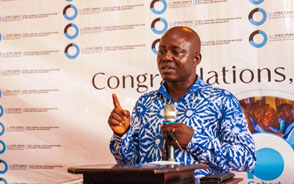
Flomo made the statement when he served as guest of honor at the 11th edition of Eddustad-Liberia.
He stressed the need to place greater emphasis on practical education alongside traditional academic qualifications.
Flomo spoke under the theme: “From Job Seekers to Job Creators.”
He urged Liberia to equip young people with the skills needed to find employment, establish businesses, and contribute to national development.
“Over 60 percent of our population are youth. Yet, too many of them are qualified on paper, but unskilled in hand. This is the root of our unemployment crisis.”
Flomo highlighted the gap between academic education, and the practical demands of the labor market.
Although university education remains important, he maintained that practical skills can open additional pathways to employment and self-reliance.
“A university degree is important, but a degree without a skill is a certificate without power.”
Flomo identified electrical installation, plumbing, masonry, automobile mechanics, and solar installation as fields that could help young Liberians earn a living and establish businesses.
He noted that developing local technical expertise would also reduce the need to rely on skilled workers from outside the country.
“The jobs are here, but the skills are imported.”
He meanwhile, called for stronger investment in vocational institutions and workforce development.
Flomo further emphasized the need for Liberia to develop without depending partly on having qualified technicians capable of supporting the construction and maintenance of roads, hospitals, laboratories, and other essential facilities.
He highlighted the potential social benefits of vocational training, particularly in helping young people avoid idleness and harmful activities.
He explained how marketable skills can enable young people to earn income, support their families, and become productive members of their communities.
“An idle youth is vulnerable. A skilled youth is busy, earning, and dignified.”
Flomo argued that addressing youth unemployment requires more than economic interventions.
He noted that its potential implications for social stability, and national development.
He encouraged the government and development partners to invest in vocational training centers, modern equipment, and practical programs that respond to labor market needs.
He also urged parents to recognize that success is not limited to white-collar employment, but skilled trades, agriculture, laboratory work, and other technical occupations can provide respectable and sustainable careers.
According to him, vocational education should prepare young people not only to seek jobs, but also to create employment opportunities for others.
Flomo called for stronger cooperation among government institutions, educational establishments, parents, development partners, and the private sector to close the skills gap.
He stressed the need for sustained investment in quality training would strengthen entrepreneurship, improve employment prospects, and increase capacity to undertake development projects.
He underscored the wider benefits of investing in young people’s potential; “because when we train one youth, we feed a family. When we train thousands, we build Liberia.”
His message reinforced the central theme of Edustad-Liberia’s 11th edition: transforming young people from job seekers into job creators requires a stronger commitment to practical education, technical skills, and entrepreneurship.
