

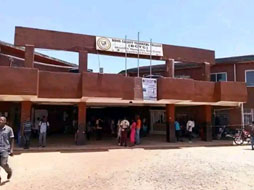

More than six years after several former and current government officials were indicted over the misuse of US$2.68 million.
The money was to construct Bong County University Technical College. Questions about prosecution, and accountability remain unanswered.
The case, which involves millions of dollars in public development funds, has become a major test to fight corruption, and ensured that allegations of financial wrongdoing involving public officials received judicial attention.
On June 5, 2019, the Liberia Anti-Corruption Commission (LACC), and the Ministry of Justice secured an indictment against several individuals, and entities over financial irregularities connected to the university’s construction.
The Grand Jury of the Ninth Judicial Circuit Court in Bong County issued the indictment.
The indictment named former Bong County lawmakers George S. Mulbah, Tokpah J. Mulbah, and Edward W. Karfiah and Representative Melvin Cole.
Others indicted included former Bong County Superintendent Rennie B. Jackson (Late), former Bong County University president, Dr. John Flomo, former Ministry of Internal Affairs project specialist, Thomas K. Cisco, former Public Works assistant chief architect, Kenneth Yao Awadjie, project engineer Marcus Berrian, and Liberia China United Investment Group, represented by its chief executive, Lian Zhi.
The defendants were accused of theft of property, criminal conspiracy, criminal facilitation, fraud against internal revenue, and violations of public procurement laws.
Contract Increase Raises Questions
The controversy surrounding the project began before the indictment.
The original construction contract, reportedly signed in October 2010, was valued at approximately US$4 million.
An addendum signed in October 2015, subsequently increased the contract value to approximately US$7 million.
The reported increase of about US$3 million, combined with concerns about construction progress, raised questions about procurement procedures, and the management of funds allocated to the project.
According to the allegations investigated by the LACC, approximately US$2.68 million was criminally converted, or misapplied through transactions associated with the construction project.
Arrest Warrants and Prosecution Delay
The prosecution’s handling of the case has also drawn attention.
LACC’s 2018–2019 annual report indicated that arrest warrants issued in connection with the case had not been served, “because the Ministry of Justice had placed a hold on their service.”
That disclosure raises a critical public accountability question: why were the warrants not served at the time, and what steps have subsequently been taken to advance the case?
The available information does not establish the current status of the proceedings, or demonstrate that the government has abandoned prosecution.
However, the absence of clear answers about the case’s final disposition leaves important questions about accountability unresolved.
For Bong County residents, the controversy goes beyond financial allegations. The university was to expand access to technical and vocational education, and contribute to development.
The public deserves clarity on the status of the case, whether any funds have been recovered, and what measures have been taken to protect public resources.
Until a court reaches a final determination, all defendants remain presumed innocent unless proven guilty.

Comments are closed.