


By Godgift Harris
Monrovia City Corporation (MCC) Mayor-designate, James K. Mulbah, has presented an ambitious US$14.5 million development vision.
The vision, Mulbah said, is to transform Monrovia. The question is whether Monrovia will finally overcome its longstanding sanitation, drainage, and urban management problems under his headship?
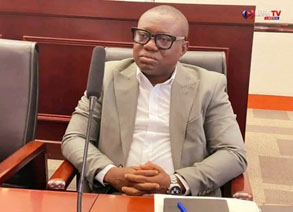
When he appeared before the Senate Committee on Local Government for confirmation hearing, Mulbah outlined a six-pillar development agenda to make Monrovia a clean, green, climate-resilient, and economically sustainable city.
The success of the proposed plan will meanwhile, depend largely on adequate funding, institutional accountability, effective enforcement, and the corporation’s ability to translate promises into measurable results.
Mulbah identified domestic revenue mobilization, integrated solid waste management, urban beautification, drainage and climate resilience, stakeholders’ coordination, and climate financing as the major pillars of his proposed administration.
He argued that Monrovia’s problem is not necessarily a lack of revenue opportunities, but the absence of effective systems to collect and manage municipal revenue.
Mulbah therefore, proposed the establishment of a Digital Monrovia Revenue Registry to register properties, and businesses, improve billing, and strengthen revenue collection.
Under the proposed system, properties, and businesses within the city limit will receive unique municipal identification numbers to facilitate monitoring, billing, and enforcement.
Questions remain about how the corporation will ensure transparency, prevent corruption, and guarantee that increased revenue translates into improved services for residents and businesses.
On sanitation, Mulbah promised to introduce an integrated waste management system that will cover waste separation, collection, recycling, and final disposal.
He also proposed dividing Monrovia into designated waste collection zones, with contractors receiving payments based on verified performance.
The plan includes a pilot initiative, known as “Separate Your Waste,” beginning in Sinkor to turn garbage into economic opportunities through recycling, compost production, energy generation, and youth employment.
But sanitation remains one of Monrovia’s most persistent challenges, with garbage accumulation, blocked drainage systems, and poor waste disposal continuing to affect several communities.
Residents will meanwhile, look beyond announcements to see whether the proposed waste management arrangements can deliver consistent, and visible improvements.
Mulbah also promised to establish green corridors along Tubman Boulevard and Somalia Drive. He swore to collaborate with development partners to plant 200,000 indigenous, and climate-resilient trees in every part of the city.
He further proposed strengthening the Monrovia City Police to enforce municipal regulations, and address irresponsible urban practices.
On flooding, Mulbah disclosed plans to work with the Ministry of Public Works to establish a Monrovia Drainage Maintenance Program.
The program, he said, will focus on drainage mapping, routine cleaning, and waste control.
The effectiveness of such an initiative, he said, will depend on sustained maintenance, adequate equipment, and cooperation from communities, and other government institutions.
To support his development agenda, Mulbah has asked the members of the senate to increase MCC’s proposed allocation in the 2027 national budget from approximately US$8.5 million to US$14.5 million.
He acknowledged President Joseph Nyuma Boakai for proposing an increase in the corporation’s budget, but said, the available resources remain inadequate to address the capital’s extensive sanitation, drainage, and infrastructure challenges.
The additional funding will support the preparation of a disposal cell at the Cheesemanburg landfill site, and the rehabilitation of waste transfer stations in Monrovia.
He also proposed establishing a Monrovia Green and Sustainable City Investment Program to attract climate financing, and international development partnerships.
Mulbah further pledged that, if confirmed, his first 100 days will focus on assessing the city’s waste management, and revenue systems, map garbage hotspots, develop a property and business database, introduce pilot waste collection zones, and identify priority areas for beautification.
If confirmed, Mulbah’s performance will ultimately be judged not by the millions requested, or the promises made before lawmakers, but by whether residents can walk through clean streets, live in safer communities and experience a city that works.
