

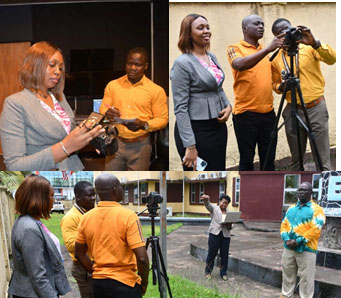

The Liberia Electoral Support Project (LESP) implemented by UNDP with BlueCrest University, recently launched a 16‑week Digital Communications Training Program for 10 communication staff at the National Elections Commission (NEC).
The exercise brought together staff members, mainly from the data center.
Participants learned how to create digital content; how to design graphics; how to record and edit videos; how to manage social media effectively, and how to use (AI) artificial intelligence tools safely and responsibly.
The exercise was the start of a major upgrade for NEC’s communication capacity.
Meanwhile, NEC’s Facebook page and website started shortly after the training to look clearer and more engaging.
“Messages are now easier to understand. Long blocks of text are being replaced with simple graphics, short videos, and well‑structured updates.”
As participant Elsie Yarkpah sai: “Before this program, many of us were not familiar with graphic arts or videography. Now we are designing visuals and producing videos that make our messages clearer.”
The team is no longer just posting information, but they are strategically communicating.
Other participants expressed gratitude to facilitators for the new skills, adding: “NEC’s digital communication has improved with faster, clearer updates to the extent that the team now shares information quickly, closing the gap before confusion spreads.
With the training, communications staff can now work more closely with technical teams to ensure social media, and website updates are accurate using better internal controls and coordination.
Useful AI tools for efficiency
New AI tools now help staff refine messages, write content, and stay accurate during busy periods.
NEC Chairperson Madam Davidetta Browne Lansanah welcomed the change.
Madam Lansanah added: “Effective digital communication is essential for transparency and accountability. These skills will strengthen how we engage the public and counter misinformation as we prepare for future elections. The improvements have made a difference in that citizens can now understand NEC messages more easily; election information is clearer and more accessible; NEC looks more professional and citizen‑focused online; Staff feel more confident and capable; misinformation will be easier to address; visual storytelling will help dispel rumors; internal teamwork and coordination will improve.”
Although NEC still faces challenges such as limited equipment, the transformation in skills and confidence is clear.
The training has prepared the Commission to enter a new era where communication is not secondary, but central to build public trust in democracy.

Comments are closed.