

Gbeisay’s Resignation, Impeachment Wished
By Godgift Harris

Barnes criticized Gbeisay’s leadership, and questioned whether he should continue serving as the head of the judicial system amid growing public debate over integrity, and the poor administration of justice?
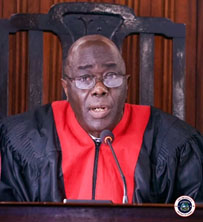
Due to recent development concerning Chief Justice Yamie Quiqui Gbeisay called for the abolition of jury system, has landed him in trouble with call for his resignation, and or subsequent impeachment.
Former Labour Assistant Minister, Emmanuel K. Barnes, has meanwhile, called on the Chief Justice to resign.
Barnes formerly contested for an elected seat in Montserrado County Electoral District #14.
He argued that concerns surrounding the vulnerability of the jury management system to bribery has raised questions about judicial accountability, and public confidence in the justice system.
In his interaction with journalists in Monrovia, Barnes sharply criticized Chief Justice Gbeisay’s leadership, and questioned whether he should continue serving as the head of the judicial system amid growing public debate over integrity, and the poor administration of justice.
Barnes also argued that if the Chief Justice has acknowledged weaknesses in the jury management system, the statement could expose it to bribery.
“He should meanwhile accept responsibility for addressing those shortcomings, but should quit the job.”
Barnes maintained that resignation should be considered if the concerns reflect a failure to ensure the integrity of the system under his leadership.
He also accused Gbeisay of inconsistency in his public conduct, referring to an incident in which the Chief Justice accused a citizen during a radio talk show; subsequently followed by a magistrate’s decision that ordered the individual jailed in Nimba County.
The circumstances surrounding the alleged incident, and any connection between the public remarks, and the subsequent judicial action were not independently established in the information provided.
Barnes further criticized the Chief Justice’s questioning of the President’s constitutional authority to make appointments.
He argued that the Chief Justice’s public positions on constitutional matters, combined with concerns about jury management, could undermine confidence in the judiciary.
Barnes described the highest judicial office as becoming a laughing stock under Gbeisay’s leadership; a characterization reflecting his personal political assessment rather than an established finding of misconduct.
While escalating his criticism, Barnes declared that if he were a member of the House of Representatives, he would seek to initiate impeachment proceedings against the Gbeisay’s Bench.
Barnes: “I want an impeachment bill brought before the plenary as early as the following day, insisting that the concerns he raised deserved serious legislative attention.”
His statement, however, represents a political call for action, and does not mean that formal impeachment proceedings have been initiated.
The accusation adds a political dimension to Barnes’ remarks, but no supporting evidence was presented to establish competence, or performance.
The controversy places renewed attention on the constitutional framework governing the removal of Chief Justice.
Constitutional clauses
Article 71 of the 1986 Constitution provides that the Chief Justice, Associate Justices of the Supreme Court, and judges of subordinate courts of record hold office during good behaviour, and may be removed through impeachment.
And conviction on specified grounds, including proved misconduct, gross breach of duty, inability to perform official functions, or conviction for treason, bribery, or other infamous crimes.
Article 43 establishes the respective roles of the Legislature in impeachment proceedings.
The House of Representatives has the authority to prepare and bring a bill of impeachment, while the Senate conducts the trial. Conviction requires the concurrence of two-thirds of the total membership of the Senate.
When the Chief Justice is being tried, the President of the Senate presides over the proceedings.
These constitutional requirements mean that a public demand for resignation is distinct from a formal impeachment process, which must follow the procedures established by law.
Beyond Barnes’ political demands, the debate raises fundamental questions about transparency, judicial independence, and the credibility of the justice system.
