

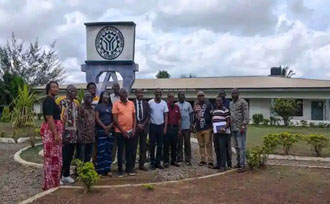

A potentially transformative US$700,000–US$800,000 investment in higher education in Bong County has uncertain future, with negotiations over the use, and management of a fully developed campus remaining unresolved.
The six-acre facility, developed by Change Agent Network (CAN), and Opportunity Network Liberia (ONL), was to expand access to higher education in the county.
It includes classrooms, administrative offices, electricity, running water, internet connectivity, furniture, and other facilities required for academic activities.
Yet months after the facility was offered to Bong County University (BCU), the campus has not been formally integrated into the university, raising concerns about whether financial disagreements are threatening to derail a major educational opportunity.
CAN/ONL founder Eric W. Wowoh, says the organization offered the facility to BCU as part of effort to improve access to education, particularly for students who face financial, and geographical barriers to learning.
But the proposed arrangement has reportedly become complicated by financial responsibilities.
Wowoh says CAN/ONL wants BCU to contribute 10 percent of the campus’s annual operating budget, and assume responsibility for approximately US$50,000 in outstanding liabilities.
BCU has expressed reservations about taking on the additional financial burden.
The university Public Relations Officer, Marcus Malayea, says BCU operates on a government allocation of approximately US$1.5 million, which must cover salaries, and other institutional expenses.
Malayea said, the university could consider a lower contribution, if the liability issue were removed, although BCU has not formally submitted a five percent proposal.
The continuing disagreement has left the future of the campus hanging in the balance.
The facility is currently being temporarily used by LICOCESS, a private teacher-training institution, adding another complication to negotiations over control, scheduling, and management of the property.
For Bong County, the dispute is about more than a financial agreement. The campus represents an opportunity to expand higher education capacity at a time when many young people continue to face challenges accessing university education.
Wowoh says, CAN/ONL has invested more than US$4 million in the country through education, and other development initiatives.
He argues that the organization’s objective is to establish facilities capable of serving Liberians for generations.
But without an agreement, the multimillion-dollar educational investment risks remaining underutilized.
The unresolved situation has now put pressure on the two sides to move beyond financial disagreements, and reach a practical solution.
For students, and communities expecting the campus to create new opportunities, the central question remains whether the US$800,000 facility will finally become a functioning part of Bong’s higher education system, or remain a major investment trapped in an unresolved financial deadlock.

Comments are closed.