

The political leader of opposition Alternative National Congress (ANC), Alexander B. Cummings, has sharply criticized the Unity Party-led administration of President Joseph Boakai.
Cummings accused the government of deepening political, economic, and institutional challenges.
He meanwhile, urged opposition parties to unite ahead of the 2029 general elections.
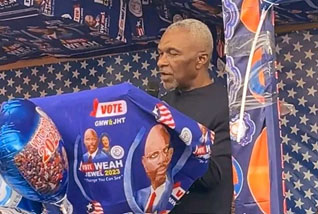
Cummings made the statement on Saturday , June 27, when he delivered the keynote address during the 22nd anniversary celebration of the opposition Congress for Democratic Change (CDC) in Zwedru, Grand Gedeh County.
Cummings claimed the current administration has failed to improve the lives of ordinary Liberians, and is instead, promoting division, selective justice and political favoritism.
To former President George Weah, opposition leaders, party executives, and supporters, Cummings congratulated the CDC on reaching its 22nd anniversary.
He described the party’s emergence as one of the defining moments in Liberia’s democratic journey.
He said, the CDC opened the doors of national leadership to ordinary Liberians, particularly those from disadvantaged communities, who had long been “excluded from political power.”
On his personal journey, Cummings compared his background to that of Weah, noting that both men rose from humble beginnings despite facing rejection and criticism throughout their careers.
He argued that their experiences symbolized the resilience and determination of many Liberians striving for equal opportunity and national progress.
Cummings maintained that the country’s political struggle has always been rooted in the pursuit of social justice, economic inclusion, and equal opportunity.
However, he argued that successive governments have failed to tackle widespread poverty, inequality, and exclusion, leaving many citizens increasingly frustrated and distrustful of public institutions.
To the Boakai administration, Cummings accused the government of serving the interests of a privileged few rather than the entire population.
He said, tribal politics, political favoritism, and partisan governance have become more pronounced under the Unity Party, weakening national unity and undermining reconciliation efforts.
Cummings further claimed that the democratic institutions are under growing pressure due to political interference.
He accused the government of unlawfully removing tenured public officials, disregarding court rulings, selectively prosecuting corruption cases, and interfering in legislative affairs.
Such actions, he said, threaten constitutional governance and weaken public confidence in the rule of law.
On the economy, Cummings dismissed government claims of progress.
He argued that ordinary Liberians continue to struggle with severe economic hardship.
He said, despite reports of economic growth and increases in the national budget, poverty, unemployment, food insecurity, and limited access to healthcare remain daily realities for the majority of citizens.
Cummings also called on opposition political parties to strengthen their collaboration in holding the government accountable.
He specifically appealed to the ANC, CDC, Citizens Movement for Change (CMC), Movement for Progressive Change (MPC), National Patriotic Party (NPP), All Liberian Party (ALP), Liberia People’s Party (LPP), and other opposition groups to set aside political differences and build a united front ahead of the 2029 elections.
In other development, Cummings called for an independent investigation into the reported US$19 million drug seized at Roberts International Airport.
He insisted that anyone connected to the case should face justice regardless of political affiliation.
He also demanded independent inquiries into the Foya development project and the recent tensions along the Liberia-Guinea border.
Cummings warned against the “increasing executive and legislative overreach,” he urged all branches of government to respect constitutional limits and judicial independence.

Comments are closed.