

“Unity Party Won Because I Left Weah Gov’t”
By: Samuel Flomo, Jr.

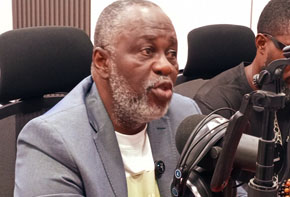
Margibi County Senator Nathaniel F. McGill has made a striking claim about Liberia’s 2023 presidential election, arguing that the ruling Unity Party would not have secured victory had he remained Minister of State for Presidential Affairs under former President George Manneh Weah.
McGill’s assertion has renewed recall to his departure from the Weah administration and the political consequences that followed, particularly as the former ruling Coalition for Democratic Change (CDC) struggled to retain power during the 2023 elections.
The senator made the claim while reflecting on his exit from government following sanctions imposed against him by the United States in August 2022 over allegations of public corruption.
McGill served as Minister of State for Presidential Affairs and Chief of Staff to Weah before his political career took a different direction following the US government’s action.
The United States Department of the Treasury designated him under the Global Magnitsky framework, accusing him of involvement in corruption, including allegations relating to bribery and the misuse of public office.
Following the announcement, Weah suspended McGill and other senior officials to allow investigations into the allegations. McGill subsequently resigned from his ministerial position in September 2022.
His departure came at a critical period, barely a year before Liberia’s October 2023 presidential and legislative elections.
McGill now suggests that his continued presence in the administration could have changed the political calculations that eventually led to Weah’s defeat.
However, he has not publicly established how remaining in office would have prevented the Unity Party from winning or provided evidence to demonstrate that his departure was decisive in the election outcome.
In November 2023, Boakai defeated Weah in a closely contested presidential run-off, securing 50.64 per cent of the votes against Weah’s 49.36 per cent, according to the National Elections Commission.
The result ended Weah’s attempt to secure a second six-year term and returned the Unity Party to the presidency.
McGill’s latest remarks also seem to raise questions about the former administration’s political management, particularly its response to the sanctions and the challenges confronting the government before the elections.
While the senator appears convinced that his departure weakened Weah’s political position, the election involved numerous political, economic and governance issues that cannot be explained by one individual’s exit from government.
His statement nevertheless could apparently add another controversial perspective to the continuing debate over why the former president lost power and what might have changed the outcome of the 2023 elections.
