

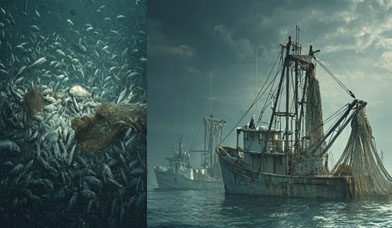

The sea has long been humanity’s lifeline — a source of food, livelihood, and wonder. Yet beneath its shimmering surface lies a growing crisis: overfishing. Driven by rising demand and unsustainable practices, our oceans are being stripped of life faster than they can replenish.
Overfishing occurs when fish are caught at a rate higher than their natural reproduction. Once abundant species such as tuna, cod, and sardines are now declining at alarming levels. This not only threatens marine biodiversity but also jeopardizes the livelihoods of millions who depend on fishing for survival.
The consequences ripple far beyond the sea. When fish stocks collapse, coastal communities face economic hardship, food insecurity rises, and ecosystems lose balance. Predatory species vanish, smaller fish overpopulate, and coral reefs — vital to ocean health — suffer. The ocean, once resilient, begins to unravel.
But there is hope. Countries that have introduced sustainable fishing policies — such as catch limits, seasonal bans, and marine protected areas — are seeing fish populations rebound. Technology also offers solutions: satellite monitoring, ecofriendly nets, and aquaculture innovations can reduce pressure on wild stocks.
Consumers play a role too. Choosing certified sustainable seafood, supporting local fisheries, and reducing waste can make a difference. Every responsible choice is a vote for healthier oceans.
Overfishing is not just an environmental issue; it is a human one. The sea connects us all, and its decline is a warning we cannot ignore.
Protecting marine life today ensures that future generations inherit oceans rich with diversity, beauty, and abundance.
The tide can turn — but only if we act now.

Comments are closed.