

NSC Reaffirms Commitment To Accelerate AAID Implementation

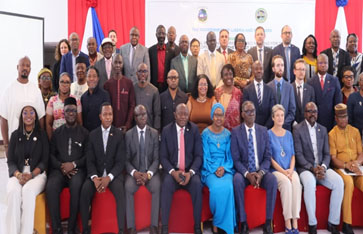
The National Steering Committee (NSC) on the ARREST Agenda for Inclusive Development (AAID), comprising the Government of Liberia, development partners, private-sector representatives, civil society organizations and other key stakeholders, has reaffirmed its collective commitment to strengthen implementation, coordination, monitor and report on the AAID in 2026 and beyond.
The commitment was reaffirmed at the National Steering Committee meeting held under the theme: “Consolidating AAID Gains: Accelerating Implementation Toward Measurable and People-Centered Outcomes”, on Tuesday, August 11, 2026 in Monrovia.
The Committee reviewed achievements, implementation challenges and lessons emerging from the first year and a half of the AAID and recognized the Agenda as a shared national commitment to translating government policies, reforms and investments into inclusive economic growth, improved public services, stronger institutions, greater accountability and tangible improvements in the lives of Liberians.
This follows an extensive deliberation; where members of the Committee collectively committed to a number of priority actions aimed at accelerating implementation and strengthening the impact of the AAID.
The Committee resolved to consolidate and scale up achievements recorded during the first year of implementation across all AAID pillars, while addressing identified gaps and ensuring that lessons learned inform subsequent phases of implementation.
Furthermore, the Committee also committed to strengthening accountability mechanisms to ensure that Ministries, Agencies and Commissions (MACs), development partners, private-sector actors and civil society organizations fulfill their respective commitments transparently and deliver measurable results.
Recognizing the changing domestic and global economic environment, the Committee emphasized the need to diversify Liberia’s development financing sources to include: strengthening domestic resource mobilization; deepening engagement with development partners to better align financing and disbursements with AAID priorities; increasing private-sector and diaspora engagement to attract investment into strategic sectors; and exploring innovative and blended financing mechanisms to sustain implementation.
However, the Committee stressed that stronger partnerships and diversified financing will be essential to protecting development gains and ensuring continued implementation of national priorities.
The National Steering Committee further committed to aligning AAID priorities with national, regional and global development dynamics, including Liberia’s commitments under the Sustainable Development Goals and the African Union’s Agenda 2063.
The Committee also emphasized citizen and community participation as a central component of national development, with particular attention to ensuring that women, young people, persons with disabilities and other vulnerable groups are both active participants in and beneficiaries of Liberia’s development process.
The Committee called for renewed political and institutional support at both national and sub-national levels to strengthen ownership of the AAID as Liberia’s pathway toward greater resilience and prosperity.
Members spoke about the urgent need to move from plans to tangible outcomes by prioritizing high-impact interventions and investments that create jobs, expand economic opportunities, improve access to essential services and enhance the livelihoods of Liberian citizens.
While the Committee acknowledged that achieving the objectives of the AAID will require sustained political commitment, it said that effective coordination, stronger institutions and enhanced resource mobilization were essential. In furtherance of that, the committee therefore committed to strengthening the systems and partnerships necessary to ensure that implementation remains responsive, efficient, transparent and firmly focused on measurable development impacts.
The National Steering Committee described the declaration as a collective determination to move from strategy to implementation, from commitments to measurable results, and from plans to lasting impact.
And called upon all stakeholders, including the Government of Liberia, development partners, private-sector institutions, civil society organizations, academia, communities and the Liberian diaspora to strengthen collaboration, ownership and collective responsibility for the successful implementation of the AAID.
A shared vision of building a Liberia that is inclusive, accountable, resilient, prosperous and responsive to the aspirations of its citizens, was reaffirmed.
It emphasized that the success of the AAID will not be measured solely by the policies, strategies and plans developed, but by the tangible improvements those interventions deliver in the daily lives of Liberians across the country.

Comments are closed.