

Gov’t Unveils Mining Reforms, Gold Refinery Plans
By: Amos Harris

The Government of Liberia has announced plans to introduce major reforms in the mining sector, including the establishment of a domestic gold refinery, the creation of a National Minerals and Mining Company, and a nationwide initiative to formalize artisanal and small-scale mining operations.
The Minister of Mines and Energy, R. Matenokay Tingban, emphasized the need for Liberia to move beyond exporting raw minerals toward domestic processing, value addition, and sustainable economic development, stressing that the country must ensure its natural resources generate meaningful benefits for citizens.
Speaking at the Second International Mining and Energy Conference and Exhibition held at the Farmington Hotel in Margibi County, on October 28, 2026, Minister Tingban said the success of Liberia’s natural resource sector should not be measured solely by the quantity of minerals extracted and exported, but also by the jobs created, industries established, local businesses empowered, and improvements in citizens’ living conditions.
The conference, held under the theme, “Transforming Liberia’s Economy: Driving Development Through Sustainable Mining and Energy Investments,” brought together government officials, international guests, investors, development partners, technical experts, and representatives of mining communities.
Minister Tingban called for responsible investments, transparent licensing procedures, predictable legal frameworks, fair fiscal arrangements, and stronger environmental protection.
He stressed that mining operations must respect community rights while creating meaningful opportunities for Liberian workers and businesses.
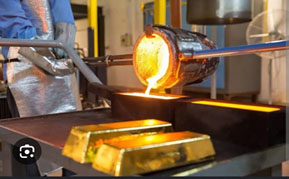
As part of the government’s reform agenda, he disclosed that the Ministry of Mines and Energy is advancing plans to establish a domestic gold refinery, aimed at increasing local value addition, strengthening oversight of the gold trade, improving mineral traceability, and boosting government revenue.
According to him, the government intends to attract technically qualified and financially credible investors through a transparent process to establish a commercially viable refinery that meets international standards for responsible sourcing, assaying, refining, and certification.
He said the proposed refinery could create skilled employment opportunities and provide licensed miners, brokers, and dealers with a credible domestic market for their gold.
However, he acknowledged that its successful operation would depend on reliable electricity, adequate environmental safeguards, and strong anti-money-laundering controls.
The minister also announced plans to establish the National Minerals and Mining Company of Liberia as a strategic vehicle for government participation in the country’s mineral sector.
The proposed institution would explore opportunities in mineral exploration, mining, processing and value addition through partnerships with qualified local and international investors, subject to the necessary legal and institutional approvals.
Tingban maintained that the proposed company would operate under professional management, transparent financial reporting, and sound corporate governance with a clear separation between its commercial operations and the Ministry of Mines and Energy’s regulatory responsibilities.
Meanwhile, the minister announced the launch of Liberia’s Artisanal and Small-Scale Mining (ASM) Formalization Initiative, which seeks to bring informal miners into the legal mining system while improving their working conditions and access to legitimate markets.
He acknowledged that artisanal and small-scale mining supports thousands of households across Liberia but noted that many miners continue operating outside formal structures that could provide improved safety standards, environmental protection, access to financing, and legal recognition.
The initiative is expected to promote accessible licensing and registration, the formation of mining cooperatives, occupational safety training, improved geological information.
Access to appropriate equipment, and the integration of miners into mineral traceability systems. Particular attention, he said, would be given to women, young people, and communities dependent on mining activities.
On critical minerals, Minister Tingban stressed that Liberia must strengthen its geological information before entering into major investment negotiations, emphasizing the principle, “No data, no deal.”
He also highlighted the importance of regional cooperation through the Africa Minerals Strategy Group (AMSG), particularly in geological research, technology transfer, financing, skills development, and local mineral processing.
The minister further identified reliable and affordable electricity as a critical requirement for Liberia’s industrial transformation.
He called for increased investments in power generation, transmission, and distribution, including hydropower, solar energy, energy storage systems, and mini-grids.
He urged investors and development partners to move beyond expressions of interest and make concrete commitments capable of delivering actual projects, employment opportunities, industrial development, and improved living conditions.
However, despite the government’s ambitious reform proposals and investment agenda, concerns have emerged over the participation and representation of local mining stakeholders at the conference.
Speaking to journalists on the sidelines of the event, Liberian gold miner and broker Victor Gary criticized what he described as limited attention given to local mining partners, particularly grassroots miners.
Gary alleged that many local miners were left out of the conference, arguing that representatives of mining communities and stakeholders from all 15 counties should have been adequately represented to ensure that discussions reflect the realities of Liberia’s mining industry.
He maintained that gold miners across the country should have been given opportunities to share their experiences, challenges, and recommendations on policies directly affecting their businesses and livelihoods.
According to him, the limited participation of grassroots miners contradicts the government’s stated objective of developing an inclusive mining sector, particularly at a time when authorities are introducing a formalization initiative intended to bring artisanal and small-scale miners into the mainstream economy.
He argued that local miners should not merely be discussed during high-level conferences but must be actively involved in shaping policies, investment decisions, and regulatory frameworks that directly affect their operations and communities.
Mr. Gary concerns have raised questions about the inclusiveness of the conference and whether the proposed mining reforms will adequately reflect the interests of ordinary Liberian miners, many of whom depend on the sector for their livelihoods.
As Liberia moves toward establishing a gold refinery, creating a national minerals company, and formalizing artisanal mining operations, the government seems to face the challenge of ensuring that local miners are not sidelined while major investment decisions are being negotiated.
