


By Domingo Dargbeh
President Joseph Nyuma Boakai, has acknowledged that many teachers continue to work without regular salaries. The situation, Boakai said, has exposed persistent weaknesses in the education workforce even as his administration celebrates efforts to improve teaching standards.
He made the statement at the Ministry of Education’s Third Annual Liberia National Educators Excellence Awards Ceremony in Paynesville, outside Monrovia on Wednesday, November 18.
Boakai said, his government has brought more than 2,000 teachers onto the payroll.
He meanwhile, admitted that many educators were still serving without regular pay.
Boakai: “Government will verify teachers’ service, make recruitment more transparent, and address outstanding cases.”
He assured educators of remaining on government active file, “because we have not overlooked you.”
“Those of you who think we have forgot you are very wrong in their thinking; we can never forget you.”
The concerns raised by Boakai reflect a wider challenge documented in the Ministry of Education’s 2025/2026 Annual School Census.
The census reports that 3,278 early childhood education teachers nationwide are being classified as ‘volunteers,’ representing 15.4 percent of the 21,335 ECE teachers. Another 811 are listed under the category of ‘teachers receiving no salary.’
The figures point to the continued reliance on teachers working outside regular government-funded employment, particularly in parts of rural communities. In Lofa County, volunteers account for 33.1 percent of early childhood education teachers, while the figures stand at 28.4 percent in Rivercess, and 27.9 percent in River Gee.
Human Rights Watch, in a report published in May 2026, also documented cases of volunteer teachers, who have worked for over 10 years without salaries.
The organization said, some public schools depended heavily on volunteer educators to keep classrooms open.
The report noted that the government moved more than 2,000 volunteer teachers onto the payroll in 2025, and increased salaries for more than 9,000 educators, but said, many teachers continued to work without government salaries.
Against this background, Boakai urged MoE to ensure that teachers receive the support, and professional opportunities necessary to improve learning outcomes.
He also pointed to the proposed minimum salary arrangements in the 2027 budget for qualified teachers in government schools administered by MoE and the Monrovia Consolidated School System.
He expressed the hope that the Legislature will support the proposal.
The proposed salary structure provides minimum monthly pay of US$650 for teachers with master’s degrees, US$400 for bachelor’s degree holders, US$240 for associate degree, and B-Certificate holders, and US$200 for C-Certificate holders.
However, the proposed adjustments will depend on the budget’s legislative approval, and implementation by the government.
Beyond salaries, Boakai acknowledged the need to strengthen teachers’ professional capacity, pointing to the US$88.7 million Excellence in Learning in Liberia (EXCEL) Project.
The five-year initiative, financed by the World Bank, and the Global Partnership for Education is to support training for approximately 12,000 teachers, and school principals, and improve foundational literacy, and numeracy for children in public schools.
Boakai said, teachers must be equipped with the tools, and training needed to help students read, reason independently, and develop the skills required for their future.
He also backed teacher certification, and licensing. He said, educators should have opportunities for professional advancement without being forced to leave classroom teaching, including those serving in remote communities.
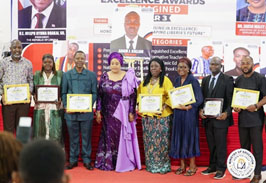
The President’s remarks came as the government recognized nine educators for outstanding contributions in classroom teaching, school leadership, education administration, inclusive education, and technical and vocational education.
