

Fear For Prosecution From Members Of The Poro Society, Harmful Traditional Practices
By: Staff Writer

Fear from the member of Liberia’s Traditional Poro society has forced a professional banker not to return from his vacation.
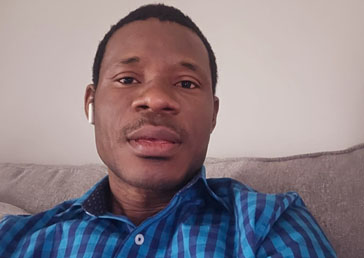
The story of Clarence Baysah, a former Liberian banking professional who says he was forced into exile after resisting the demands of Liberia’s influential traditional Poro Society, has reignited national and international debate over the fragile intersection of culture, human rights, and personal liberty in one of West Africa’s oldest republics.
Baysah’s account deeply personal, painful, and controversial has become emblematic of a wider struggle unfolding across Liberia’s rural communities, where traditional secret societies continue to wield immense cultural, social, and political authority.
Now living in self-imposed exile in the United States and seeking legal protection, Baysah claims years of intimidation, threats, and psychological pressure followed his refusal to remain actively tied to the Poro Society, a powerful male institution deeply rooted in Liberia’s indigenous heritage.
“I was a child. I had no voice,” Baysah said in a reflective interview. “What happened to me was not culture; it was coercion.”
A Nation Torn Between Tradition and Modernity
Founded in 1847, Liberia, the first independent republic in Africa is home to an estimated 5.4 million people, according to recent demographic projections.
While the country maintains democratic governance and constitutional protections for freedom of belief and association, traditional systems remain deeply embedded in many parts of society.
For centuries, secret societies such as the Poro for men and Sande for women have functioned as alternative systems of governance, education, social discipline, and spiritual authority, particularly in rural Liberia, Sierra Leone, Guinea, and Côte d’Ivoire.
Anthropological estimates suggest that nearly 60 percent of Liberia’s rural population remains under the influence of these societies, especially in counties such as Bong, Nimba, Lofa, Grand Cape Mount, Gbarpolu, and Bomi.
Historically, the Poro Society has served as a rite of passage for boys into manhood, teaching values of discipline, leadership, secrecy, and community loyalty.
But critics argue that in many cases, those practices have evolved into systems of coercion where refusal is rarely accepted.
Human rights advocates have long raised concerns over forced initiation, ritual secrecy, and allegations of abuse.
Between 2015 and 2020, local civil society organizations documented dozens of complaints involving forced traditional practices, particularly in rural communities where state authority often overlaps with customary power structures.
Yet prosecutions remain rare, hindered by fear, silence, and political sensitivities.
From Banking Halls to Hiding
Before his exile, Baysah was building what many described as a promising career in Liberia’s expanding financial sector.
Liberia’s banking industry has undergone significant transformation over the last two decades.
The country’s formal financial system grew from just seven commercial banks in 2005 to more than nine licensed banking institutions by 2021, according to Central Bank records, reflecting broader economic reforms and rising financial inclusion.
Professionals like Baysah represented a new generation of educated Liberians helping shape the country’s economic recovery after years of civil conflict.
But Baysah says his professional success could not shield him from ancestral obligations.
According to his testimony, his ordeal began in childhood when he was allegedly taken into the Poro bush against the wishes of his mother, an initiation he describes as traumatic and involuntary.
The conflict, he says, intensified years later following the death of his father, who reportedly held influence within traditional leadership circles.
Community elders allegedly demanded that Baysah return to his ancestral home and assume sacred family responsibilities connected to the Poro Society.
He refused.
That refusal, he says, marked the beginning of a relentless campaign of intimidation.
“They made it clear that tradition does not release you,” Baysah recalled. “They believed my bloodline obligated me.”
He alleges that members tracked his movements, interrogated relatives, and mounted sustained pressure on his immediate family particularly his mother, who had supported his formal education and resistance to traditional expectations.
Rights organizations in Liberia have increasingly documented cases involving individuals fleeing rural communities over forced participation in secret society rituals, though many incidents remain unreported.
Liberia’s Constitution guarantees freedom of conscience and religion, but legal experts say enforcement remains complicated in regions where customary law carries substantial weight.
For some analysts, Baysah’s case highlights a dangerous gap between constitutional rights and cultural realities.
“Liberia continues to struggle with balancing traditional authority with modern human rights standards,” one Monrovia-based human rights observer noted. “This is not simply a legal issue; it is a deeply social and political one.”
Defenders of Tradition Push Back
Supporters of the Poro Society reject accusations that the institution is inherently abusive.
To them, the society remains a sacred cornerstone of indigenous identity, moral discipline, and community cohesion particularly in a nation still healing from two devastating civil wars that claimed an estimated 250,000 lives between 1989 and 2003.
For many traditional leaders, the erosion of these institutions represents a threat to Liberia’s cultural survival.
“The Poro is not violence,” said one elder familiar with customary practices. “It is who we are.”
But critics argue the issue is not tradition itself, but the absence of consent.
“When culture becomes compulsory, it ceases to be culture and becomes oppression,” said a Liberian civil rights campaigner.
Exile and Uncertainty
Baysah who came to the US for a visit with hope of returning home soon was subsequently coerced to stay due to massive threats on his life by the Poro Society back home including his family.
He claims family members and close friends continue to warn him that individuals linked to the society are still seeking his return.
“My family has suffered because of my refusal,” he said. “They should not have to live in fear because I chose freedom.”
His situation now rests on whether international legal systems will recognize his experience as persecution tied to cultural coercion and personal belief.
For Baysah, the future remains uncertain.
For Liberia, however, his story has become a powerful symbol of a deeper national reckoning.
Can tradition and human rights coexist without force?
Can ancient customs survive in a modern democracy where individual choice is protected by law?
And for many Liberians watching this case unfold, the most difficult question remains:
Where should culture end and freedom begin?

Comments are closed.