

“The House has subsequently transmitted the approved instrument to the senate for concurrence in keeping with legislative process,”-the report.
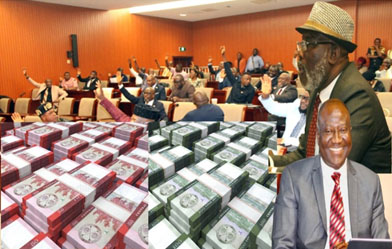
Members of the 55th Legislature on Thursday, July 9, authorized the Central Bank of Liberia (CBL) to print additional L$79 billion ‘new banknotes.’
Plenary of the House too the decision during its 18th Day Sitting.
The approved instrument has subsequently been transmitted to the senate for concurrence in keeping with the legislative process.
Lawmakers endorsed the report of its Committee on Banking, Currency and Insurance, granting the CBL the right to print up to L$79 billion in dollar banknotes.
The decision follows a series of public hearings and extensive consultations, which involved the Executive Branch, the CBL, the Ministry of Finance, technical experts, private sector stakeholders and members of the public.
While presenting its report to Plenary, the Committee stated: “After carefully reviewing the revised proposal, prevailing macroeconomic conditions, operational requirements of the banking sector, and the broader public interest, it was satisfied that the request is primarily intended to replace deteriorated and mutilated Liberian dollar banknotes, improve the quality and integrity of the national currency, strengthen cash availability, and ensure the continued efficiency of the payment system.”
The Committee said, rather than granting approval in phases, it adopted a “stronger legislative approach by authorizing the printing of the entire amount the CBL requested, while recognizing that the Bank will determine the sequencing and timing of production and circulation based on prevailing macroeconomic conditions, replacement needs, currency demand, and fiscal policy considerations.
The approach, the Committee said, offers several advantages, including eliminating the need for repeated legislative approvals for future printing requests, providing certainty to the Central Bank, international currency printers, and the Executive, reducing procurement and production costs, and allowing the Central Bank the flexibility to print only the quantity required when necessary.
The Committee further noted that the authorization demonstrates responsible legislative oversight while preserving the Central Bank’s independence in the implementation of monetary policy.
To address concerns expressed by members of the public, development partners, and other stakeholders, the Committee clarified that legislative approval to print the banknotes does not automatically increase the money supply.
“The Legislature has approved the printing of the entire quantity the VBL requested. However, the actual production schedule, shipment, storage, infusion and replacement of existing banknotes in circulation shall be undertaken by the CBL in accordance with prevailing macroeconomic conditions, replacement requirements, currency demand, and prudent monetary policy.”
The Committee also recommended several safeguards to accompany the authorization, including: that the approval is strictly for the printing and replacement of Liberian dollar banknotes; any infusion of new currency into circulation shall be undertaken only in accordance with the CBL Act and applicable monetary policy; the Central Bank shall submit quarterly implementation reports to the Legislature, that the House Committee on Banking, Currency and Insurance shall continue to exercise oversight throughout the implementation process.
In its findings, the Committee concluded that the majority of the proposed banknotes are intended to replace mutilated notes already in circulation rather than expand the money supply.
The Committee further found that the Central Bank has the statutory responsibility to maintain an adequate supply of clean, secure, and serviceable currency, and that printing banknotes does not automatically result in increased currency circulation, as newly printed notes may remain in secure vaults until needed for replacement purposes.
Additionally, the Committee determined that granting authorization for the full quantity requested would facilitate orderly procurement, production scheduling, transportation, insurance, storage, and future replacement operations, while avoiding unnecessary delays and increased costs associated with seeking separate legislative approvals for each phase of printing.

Comments are closed.