

Boakai’s “No Apology” Message Scrutinized
By Godgift Harris

President Joseph Nyuma Boakai’s latest declaration that his administration has “no apology” for doing what is right for the Liberian people has stirred public debate.
Many citizens and civil servants say the government’s rhetoric has increasingly disconnected from the harsh realities they continue to face.
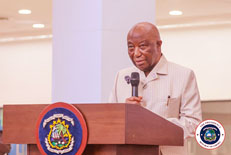
At Thursday’s (April 9) third Cabinet Meeting in its fourth sitting of 2026, held at the Tea House of the Executive Mansion, Pres. Boakai urged ministers and senior officials to remain focused, results-driven, and committed to improve Liberians living conditions.
The meeting was held under the theme: “Rethinking Infrastructure Planning, Development, and Governance to Advance Modernization, Addressing Liberia’s Unregulated Construction and Enforcing Zoning Discipline, and Promoting Planned Development.”
Pres. Boakai insisted that his administration will not retreat from decisions it believes are in the public interest.
“We have no apology when we do things that are right for our people. We are here to put the best for our people.”
Yet outside the Executive Mansion, many Liberians are asking a blunt question, what exactly are the measurable benefits citizens have realized nearly three years into the Unity Party-led government.
For thousands of civil servants, the country, the most immediate concern remains stagnant wages and worsening economic hardship.
Many lower-level government employees reportedly still earn salaries around US$150 per month, an amount, critics say, is no longer sustainable in the face of rising transportation, food, rent, and education costs.
The frustration is especially notable because the administration came to power on the promise of rescue, reform, and better governance after years of public dissatisfaction under the former Coalition for Democratic Change (CDC)-led government.
However, many citizens argue that while the political actors have changed, the everyday struggles of ordinary Liberians remain largely the same.
During the Cabinet session, Pres. Boakai called on ministers to prioritize results over effort, warning that government officials must not become distracted by criticism or public noise.
He used a local proverb, which suggested that overreacting to critics can derail progress and delay national achievement.
But for many citizens, criticism is no longer simply political noise, but a reflection of lived hardship.
The Cabinet meeting placed significant emphasis on what the President described as: “Reordering Greater Monrovia,” an urban policy push to restore order, improve zoning compliance, and address the city’s growing infrastructure pressures.
A major outcome of the deliberations was around a national infrastructure policy roadmap (2026–2029); a framework expected to guide phased infrastructure planning, governance, and implementation over the next several years.
Boakai raised alarm over the rapid spread of unregulated construction, especially in Monrovia, where population growth has surged from an estimated 350,000 residents in the post-war period to well over one million.
He warned that the uncontrolled expansion has placed enormous pressure on water, electricity, schools, roads, and healthcare systems, while also worsening sanitation and congestion.
Pres. Boakai instructed the Ministry of Public Works to intensify enforcement of zoning laws and city ordinances, particularly against illegal structures built in alleyways and drainage corridors.
He also highlighted ongoing road construction initiatives, which he described as essential to long-term mobility and economic activity.
He reassured the public that the government remains committed to sustainable road connectivity despite concerns over some project routes and alignments.

Comments are closed.