

War Crimes Court Faces Delay, Funding Crisis
By Amos Harris

Liberia long-awaited War and Economic Crimes Court is facing renewed uncertainty following reports that lawmakers have postponed consideration of the proposed legislation until January 2027, while the government’s proposed US$1.2 billion national budget reportedly makes no specific provision for the establishment and operation of the court.
The development has raised serious questions about the commitment of the Executive and Legislature to delivering justice for thousands of victims and survivors of Liberia’s 14-year civil war.
Decades after the conflict, many victims continue to demand accountability for killings, sexual violence, torture, displacement and other serious human rights violations.
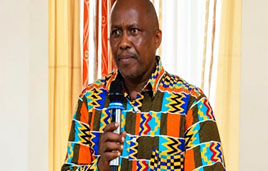
Cllr. Jallah A. Barbu, Executive Director of the Office for the Establishment of the War and Economic Crimes Court for Liberia, disclosed that his office was informed through the Office of the Speaker of the House of Representatives that lawmakers were prioritizing other national matters, resulting in the reported postponement of the bill until January 2027.
Barbu made the disclosure during the dedication of a public awareness billboard for the proposed court in Monrovia. He also questioned whether lawmakers had adequately consulted their constituents about the importance of establishing the court during the legislative break.
The reported postponement has intensified concerns about the priorities of lawmakers, particularly when the proposed institution is intended to address one of the darkest chapters in Liberia’s history.
For victims and survivors, another delay represents a painful reminder that justice continues to be postponed despite repeated political promises.
Beyond the legislative setback, the absence of a dedicated operational allocation in the proposed national budget presents another serious obstacle.
Establishing the court will require substantial resources for investigations, prosecution, judicial administration, witness protection and assistance to victims and survivors.
Without clear financial commitments, the proposed institution could remain largely a political declaration rather than a functioning judicial body.
Although President Joseph Nyuma Boakai renewed the mandate of the preparatory office in May 2026 through Executive Order No. 164, providing an annual appropriation of US$2 million through the Ministry of Justice.
The allocation is intended to support preparatory activities and should not be confused with the full operational funding required for the court.
President Boakai submitted the proposed War and Economic Crimes Court legislation to the Legislature in May 2026, alongside a separate bill seeking the establishment of a National Anti-Corruption Court.
However, both initiatives require legislative approval and adequate financial support before they can become operational
The situation is particularly sensitive because of Liberia’s complicated political history. Many Liberians believe that establishing a credible War and Economic Crimes Court will face significant political resistance because some individuals who held positions of authority during the civil war.
Including political figures and former combatants, are now part of the country’s political and public institutions. However, allegations of individual responsibility must be established through credible investigations and due process rather than political assumptions.
This raises a fundamental question: Can Liberia’s political establishment genuinely support a court that could investigate individuals from within its own ranks or political networks…
The possibility of powerful individuals being investigated is likely to test the country’s political will, institutional independence and commitment to the rule of law.
The Truth and Reconciliation Commission (TRC) previously recommended accountability for individuals responsible for serious human rights violations during Liberia’s civil conflict.
Yet, years after the commission submitted its recommendations, many of its key accountability proposals remain unfulfilled, leaving victims questioning whether political interests have continued to overshadow justice.
With consideration of the proposed legislation reportedly pushed to January 2027 and no dedicated operational funding reflected in the proposed budget, both the Executive and Legislature face growing pressure to demonstrate that their commitment to justice goes beyond public speeches and political declarations.
For thousands of victims and survivors, the establishment of the War and Economic Crimes Court is not simply another government project.
It is a demand for accountability, recognition of suffering and an opportunity to confront Liberia’s painful past.
Another delay could further undermine public confidence and reinforce the perception that justice in Liberia remains dependent on political convenience rather than the rule of law.
