

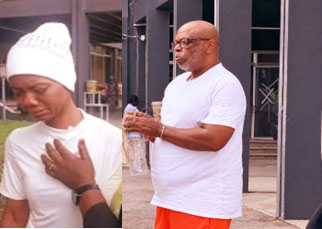

Criminal Court “E” assigned Judge, Wesseh Alphonsus Wesseh Sr., on Tuesday, November 3, 2026, sentenced former National Security Agency (NSA) Deputy Director General Peter Bon Jallah to 50 years’ imprisonment following his conviction for statutory rape, while quashing the guilty finding against him on the charge of kidnapping and ordering fresh proceedings before Criminal Court “A.”
The ruling followed a hearing into the defense’s motion for a new trial and the prosecution’s resistance, which presented competing arguments concerning the court’s jurisdiction, the sufficiency of the evidence, and the appropriate legal remedy following the October 23 verdict.
Although Judge Wesseh rejected the defense’s request to reopen the entire case, he granted the prosecution’s request to set aside the kidnapping conviction and forward that charge to Criminal Court “A” for fresh proceedings.
The distinction is significant: Jallah has not been acquitted of kidnapping.
Rather, the existing guilty finding has been quashed, leaving the prosecution with the opportunity to pursue the allegation afresh before the appropriate court.
Following the ruling, the defense immediately objected and announced its intention to appeal to the Supreme Court of Liberia, signaling that the legal battle surrounding the case is far from over.
The ruling represents a major development in a case that has generated considerable legal debate since Judge Wesseh delivered his verdict on October 23.
At the conclusion of the bench trial, the judge found Jallah guilty of statutory rape and kidnapping but acquitted him of gang rape.
The defense subsequently filed a motion for a new trial on October 27, seeking to have the convictions set aside.
It argued that the verdict was inconsistent with the evidence, that the court committed legal and procedural errors, and that Criminal Court “E” lacked jurisdiction to determine the kidnapping charge.
However, in its October 29 resistance, the prosecution opposed the request for a new trial while advancing a separate argument concerning the kidnapping conviction.
Prosecutors urged Judge Wesseh to preserve the statutory rape conviction while vacating the kidnapping finding and transferring that charge to Criminal Court “A” for fresh prosecution.
The State maintained that the jurisdictional question surrounding kidnapping should not invalidate the court’s determination on statutory rape, which it argued was supported by the evidence presented during trial.
The prosecution also contended that the defense had invoked the wrong procedural remedy, arguing that its challenge did not satisfy the legal requirements for a new trial under the Criminal Procedure Law.
Judge Wesseh’s ruling effectively adopted the prosecution’s proposed approach, separating the kidnapping charge from the statutory rape conviction.
By quashing the kidnapping finding and directing fresh proceedings before Criminal Court “A,” the judge removed the existing guilty determination without terminating the prosecution of that charge.
Defense Announces Supreme Court Appeal
Despite the court’s decision, the defense announced plans to challenge the ruling before Liberia’s highest court.
The defense had maintained that the court’s findings on kidnapping and gang rape were difficult to reconcile because both charges were connected to the alleged incidents at Camp Johnson Road. It also questioned the sufficiency of the medical and forensic evidence, arguing that the DNA findings did not independently establish sexual penetration and that other aspects of the proceedings raised concerns about the fairness of the trial.
The prosecution, however, rejected those arguments, insisting that the evidence, considered as a whole, supported the statutory rape conviction.
The announced appeal could place the jurisdictional and evidentiary questions before the Supreme Court, subject to applicable procedural requirements.
Kidnapping Charge to Face Fresh Proceedings
While Jallah’s statutory rape conviction remains intact, the kidnapping allegation will now proceed separately before Criminal Court “A.”
The decision means the State retains the opportunity to prosecute the kidnapping allegation through fresh proceedings before the appropriate court.
The development also raises questions about how prosecutors will proceed with the charge and what effect, if any, the earlier trial record may have on the new proceedings.
Meanwhile, the acquittal on the gang rape charge remains undisturbed.
Background of the Case
The charges against Jallah arose from allegations involving a 16-year-old boy who reportedly performed paid domestic chores at his residence in Monrovia.
According to the indictment, prosecutors alleged that the complainant was sexually assaulted on multiple occasions in late 2025 and that a subsequent incident in January 2026 involved his transportation to a building in the Camp Johnson Road area, where he was allegedly confined and sexually abused.
Two unidentified men were also named in connection with the allegations but were not brought before the court during Jallah’s trial.
During the proceedings, the prosecution presented 13 regular witnesses and six rebuttal witnesses, including the complainant, police investigators, medical personnel, and forensic examiner Pascal Bavugirije of the Rwanda Forensic Institute.
The defense presented eight witnesses, including Jallah himself, and challenged the prosecution’s interpretation of the medical findings, DNA evidence, and testimony surrounding the alleged incidents.
On October 23, Judge Wesseh found Jallah guilty of statutory rape and kidnapping but acquitted him of gang rape.
Tuesday’s ruling has now altered the legal status of that verdict: Jallah faces 50 years’ imprisonment for statutory rape, the kidnapping finding has been quashed for fresh proceedings before Criminal Court “A,” and his acquittal on gang rape remains undisturbed.
