

Liberia Economic Growth Fails To Ease Citizens’ Hardship
By: Amos Harris

Liberia economy is recording positive growth, but the benefits appear to be reaching ordinary citizens unevenly, raising serious questions about whether improving economic indicators are translating into meaningful improvements in living conditions.
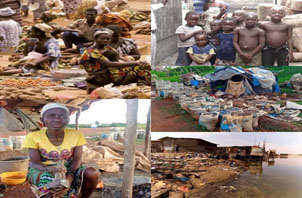
Despite reported expansion in the mining sector and declining inflation, market women, traders and low-income households in Monrovia and its environs continue to complain about high commodity prices, weak purchasing power and growing financial difficulties.
While government officials may point to economic growth as evidence of progress, the experiences of ordinary Liberians present a different picture.
For many families, the pressing concern is not how fast the economy is growing, but whether they can afford food, transportation, healthcare, rent and school fees without exhausting their limited incomes.
According to the economic figures provided, Liberia’s real Gross Domestic Product (GDP) grew by approximately 5.1 percent in 2025, largely driven by mining and extractive industries.
Growth projections for 2026 remain between 5 and 5.5 percent, however, these figures have yet to convince many struggling citizens that economic expansion is producing tangible benefits in their daily lives.
The mining sector reportedly expanded by 17 percent in 2025, underscoring its growing contribution to the national economy.
Yet, increased mining activities do not automatically guarantee widespread employment, higher household incomes, or affordable essential commodities.
Without transparent revenue management, local job creation, and investments that benefit communities, mining-led growth risks leaving many Liberians on the margins of economic progress.
Speaking to reporters, Ma Evron, a trader at the Waterside Market in Monrovia, expressed frustration over what she described as the limited impact of the government’s reported economic progress on market sellers and consumers.
She questioned the practical benefits of the government’s reported one-billion-dollar economic figure, saying ordinary traders have yet to experience meaningful improvements in their businesses and living conditions.
“ The rate has dropped, but the prices of goods are still the same, what is the difference now?
Nothing,” Ma Evron said, describing a situation in which both sellers and buyers continue to complain about the cost of goods.
Her remarks reflect the frustration of traders who struggle to maintain sales as consumers become increasingly cautious about spending.
At the Clara Town Market, Josephine Langford, a dry-fish seller, described the daily struggle of sustaining her business and meeting household expenses.
She said many traders are barely earning enough to support their families, leaving little or nothing to save through the traditional susu system.
“We are doing from hand to mouth, we are even finding it very difficult to put susu on a daily basis,” Langford said, highlighting the financial pressure facing small-scale traders.
Her account raises concerns about the vulnerability of informal-sector workers, many of whom operate without stable salaries, pensions, job security, or reliable social protection.
Langford called on President Joseph NyumaBoakai to visit local markets and stores to observe the economic conditions facing ordinary Liberians firsthand.
She argued that direct engagement with market women and small business owners would give the President a clearer understanding of the challenges confronting citizens beyond the reports and assessments presented by government officials.
Her appeal also underscores the importance of listening to citizens when evaluating the effectiveness of economic policies.
The cost of living remains a major concern, particularly because Liberia depends heavily on imported rice and other essential commodities.
Exchange-rate movements, international market conditions, transportation expenses and supply-chain disruptions can influence local prices.
Although inflation reportedly declined from between 6 and 8.5 percent in 2025 to approximately 5 percent year-on-year by mid-2026, lower inflation does not necessarily mean that commodity prices have fallen.
It generally means prices are rising more slowly, leaving consumers to continue paying elevated prices for basic necessities.
The broader economic situation also raises questions about poverty reduction, employment, and public spending.
The figures provided estimate that extreme poverty affects approximately 35.8 percent of the population, while nearly 80 percent of employment remains informal.
Meanwhile, public debt is estimated at 54 to 55 percent of GDP, and foreign reserves are reported to cover between 2.4 and 2.9 months of imports.
These figures require careful verification against current official reports, but they highlight the importance of sound fiscal management and productive investment.
The Boakai administration faces the challenge of demonstrating that economic growth can deliver measurable improvements in household welfare.
Greater transparency in mining revenues, stronger support for local agriculture, access to affordable financing for small businesses, improved roads and electricity, and the creation of decent-paying jobs are critical to making economic progress more inclusive.
The government must also strengthen public services and address the structural problems that keep the prices of essential goods beyond the reach of many families.
Liberia economic success should not be measured by GDP growth alone, but by whether ordinary citizens can afford their basic needs and build more secure livelihoods.
The complaints from Waterside and Clara Town markets offer a reminder that national economic statistics can look encouraging while many households continue to struggle.
President Boakai’s administration must respond with practical measures that citizens can feel in their pockets and see in their communities.
Until economic growth translates into affordable goods, stronger purchasing power, and better opportunities, the gap between Liberia reported progress and the daily realities of its people will remain a major test of the government’s leadership.

Reliable login access and round the clock support make such a huge difference when you are trying to unwind after work. I have tested multiple gaming spots and this one delivers consistent performance without any annoying downtime. Great selection of titles and fair odds across the board. inf899login