


“Corruption has direct consequences on ordinary Liberians, particularly when resources intended for education, healthcare, and infrastructure are diverted, or mismanaged,” — Samuel A. Stevquoah.
The Liberia Anti-Corruption Commission (LACC) has declared a renewed commitment to confront corruption.
The renewal came as the institution marks 18 years of existence. The leadership called for stronger action, but questions abound as to whether the fight against graft has produced enough accountability.
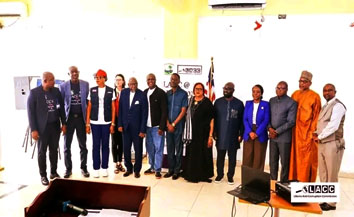
The Commission commemorated its 18th anniversary on Friday, August 28, at a resort in Monrovia under the theme: “LACC at 18: Reflecting on the Journey, and Renewing the Commitment.”
While the celebration highlighted nearly two decades of efforts to promote transparency, integrity, and accountability, it also came at a time when public frustration over allegations of corruption, misuse of public resources, and limited accountability remain a major concern.
LACC Executive Chairperson, Alexandra K. Zoe, presented the key achievements, and milestones under the presentation, “18 Years of the LACC: A Journey in Numbers.”
But beyond the statistics, and anniversary celebrations, a critical question remains, after 18 years of operation, how much progress has the country made in ensuring that those accused of stealing, or misusing public resources are held fully accountable?
In the keynote address, the Minister of State for Presidential Affairs, Samuel A. Stevquoah, called for a tougher, and more preventive approach to corruption.
Stevquoah warned against relying only on investigations after public resources have reportedly been misused.
He stressed the need for Liberia to strengthen systems capable of preventing corruption before the damage is done.
Stevquoah’s remarks reflect a longstanding weakness in the anti-corruption fight, where investigations are often launched after allegations emerged, while questions remain about the effectiveness of preventive mechanisms, and the consequences faced by those found responsible.
He said, corruption has direct consequences for ordinary Liberians, particularly when resources intended for education, healthcare, and infrastructure are diverted, or mismanaged.
The argument is simple, but significant: every dollar lost through corruption represents resources that could have been used to improve the lives of citizens.
Meanwhile, the Minister of Finance and Development Planning, has recommitted to provide financial support to the LACC.
The ministry said, the support would strengthen the Commission’s institutional capacity, and help sustain its anti-corruption programs.
However, critics may argue that financial support alone will not solve corruption problem.
The real test will be whether the LACC has the independence, resources, legal backing, and political support necessary to investigate powerful individuals, and institutions without fear, or interference.
The anniversary brought together government officials, development partners, civil society actors, former LACC officials, and other stakeholders in governance, and accountability system.
As the Commission enters its 19th year with the focus to shift beyond speeches, promises, and commemorations toward measurable results.

Comments are closed.