
House Holds Public Hearing On ‘Controversial’ FGM Bill
By Fiona Benson Kollie

By Fiona Benson Kollie
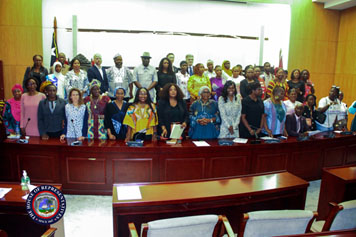
The leadership of the House of Representatives Joint Committee on Gender, Education and Public Administration, Internal Affairs, and Judiciary on Tuesday, February 10, 2026, held a well-attended public hearing with national and international partners on the controversial Female Genital Mutilation (FMG) Bill.
The Bill Followed extensive consultations in five counties with traditional leaders, rural women’s groups, and civil society organizations.
The hearing brought together development partners, including representatives from the European Union, UN Agencies (UN Women), Civil Society Organizations, and the Ministry of Gender, Children and Social Protection.
The panelists reviewed and validated findings from the community consultations.
the consultations showed broad support for the passage of the draft bill into law to ban the practice in the country.
The consultation, branded: “Born Perfect Grand Finale, From Community Dialogue to National Action,” revealed that the majority of community members consulted, described FGM as “dangerous.”
They expressed support for legislative action to protect women and girls from the procedure.
A formal presentation on the baseline analysis, key messages, and key results from the five-county survey was delivered by Medica Liberia, providing evidence-based insights to guide lawmakers’ deliberations.
While delivering the statement of the Joint Legislative Committee on the Women and Girls Protection Bill, the Chairperson, Moima Briggs-Mensah, said, the proposed Women and Girls Protection Act, represents a significant step to safeguard the dignity, safety, and rights of women and girls.
She therefore wants the effective implementation and reform of the Act to be guided by responsible and respectful messaging.
The message, Madam Mensah said, should focus on protection, health, human dignity, and opportunity rather than blame or cultural condemnation, cultural sensitivity, acknowledging long-standing traditions and engaging constructively with cultural institutions.
This, she said, should include the predominately female from the Sande Society, as partners in promoting health, safety, and empowerment, inclusive grassroots consultations, ensuring that communities are meaningfully involved in shaping reforms and that policies reflect lived realities; comprehensive support systems, including education, healthcare access, alternative empowerment programs, and economic opportunities for women and girls, alongside legal protections.
Rep. Mensah said strengthening the Women and Girls Protection Act requires a balanced and inclusive approach firm in its commitment to safety and rights, yet culturally aware, consultative and united in purpose.
During the hearing, some lawmakers called for the consultation process to be extended to all 15 counties to further involve ordinary residents, and deepen public education and awareness ahead of the bill’s passage.
The House meanwhile, recommitted to protect women and girls, and advanced reforms through dialogue, unity, and progressive national action.
