

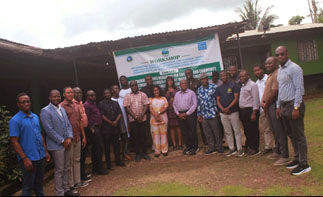

The Environmental Protection Agency (EPA) has opened a four-day workshop to integrate Water, Sanitation and Hygiene (WASH), and child-centered approaches into the implementation of National Adaptation Plan (NAP). The workshop, supported by UNICEF, runs from October 20–23, at the Survivors Aid International Conference Hall in Gborfellah Community, Kakata, Margibi County. It converged government institutions, development partners, civil society organizations, and youth representatives. The participants discussed ways to strengthen climate resilience, and protect children and vulnerable communities. Arthur R. M. Becker, EPA Director of Multilateral Environmental Agreements, thanked UNICEF, and other partners for supporting the initiative. Becker said, climate change is already affecting communities through flooding, drought, damage to infrastructure, and disruptions to essential services.
He noted how children and other vulnerable groups are often among those most affected, especially when climate-related events disrupt access to safe drinking water, sanitation and hygiene services. Mr. Becker emphasized the need for climate-resilient WASH services to be treated as an important part of the climate adaptation efforts.
He explained how reliable water supplies, safe sanitation facilities, and proper hygiene services are necessary to protect public health and build stronger communities.
Becker also called for stronger cooperation among government ministries and agencies, development partners, local authorities, civil society organizations, and communities to ensure that climate adaptation plans produce practical results. He called on the participants to identify priority actions; agree on institutional responsibilities; develop monitoring systems, and explore funding opportunities to support climate-resilient WASH services. He further stressed the importance of including children, adolescents, and young people in decisions that affect their lives and communities. Morris G. Gono, Jr., Executive Director of the National Water, Sanitation and Hygiene Commission, commended EPA for its leadership and partnership to advance climate resilience and sustainable development. Gono said, climate change poses growing risks to water and sanitation systems. He explained how when water systems fail, sanitation facilities are damaged, or disease outbreaks occur, children often face serious consequences.
While acknowledging progress in access to drinking water, he said, major challenges remain in sanitation and hygiene.
Gono meanwhile, called for water and sanitation services to be better integrated into climate adaptation planning, financing, and monitoring.
