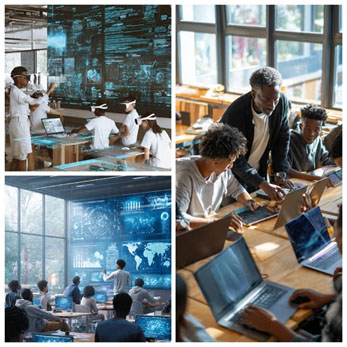
Revamping our educational system to align with technology is no longer optional; it is a necessity for national progress. As the world advances rapidly, societies that fail to integrate technology into education risk falling behind. This reality demands that schools, universities, and training institutions embrace innovation as a central pillar of learning.
At the classroom level, technology transforms teaching and learning. Digital platforms, interactive tools, and online resources allow students to access knowledge beyond textbooks. They empower teachers to deliver lessons more effectively, while students gain opportunities to collaborate, research, and think critically. This shift enhances engagement and prepares learners for modern challenges.
At the institutional level, aligning education with technology strengthens management systems. Student Information Systems, Learning Management Systems, and digital libraries streamline administration and improve efficiency.
These tools ensure that data is accurate, accessible, and useful for decisionmaking. Thus, institutions become more accountable and responsive to the needs of learners.
At the national level, technologydriven education builds a workforce ready for global competition. It equips graduates with digital literacy, problemsolving skills, and adaptability. Consequently, the country benefits from professionals who can innovate, lead, and contribute meaningfully to economic growth.
In conclusion, revamping education to align with technology is about more than modernization—it is about survival and relevance. It ensures that the next generation is not only educated but also empowered to thrive in a digital world.
Therefore, investment in technologydriven education must be prioritized today to secure tomorrow’s progress
Countries like Japan, Singapore, India, Ivory Coast, Nigeria, Rwanda, amongst other African nations, are actively integrating technology into education, while Liberia still struggles with limited access—many graduate students have never worked on a computer. Globally, digital literacy is now a basic requirement from elementary to university levels.