The Rural and Renewable Energy Agency, has announced an ambitious plan to fully electrify Barclayville City in Grand Kru County by December, 2026.
The pending exercise is being described as a major breakthrough for one of the long-neglected Southeastern counties.
For decades, residents of Barclayville have struggled with limited access to stable electricity, relying heavily on private generators, candles, and solar lamps for survival, while successive governments repeatedly promised development with little visible progress.
The latest announcement has generated both optimism and criticism among the locals, many of whom argue that the county’s prolonged lack of electricity reflects years of political neglect despite Grand Kru being home to prominent national figures.
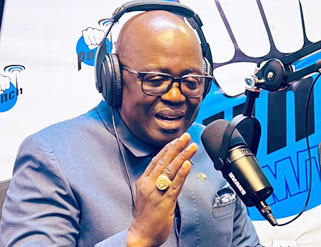
While speaking during an interview at a local radio station, RREA Executive Director, Samuel Bokay Nagbe, Jr. disclosed that government has allocated approximately US$1.8 million in the 2026 budget to address electricity challenges, not only in Barclayville, but also in neighboring county capitals in the Southeast.
Nagbe revealed how construction activities have already commenced at the proposed power generation site, with engineers and technicians beginning preliminary groundwork for a “hybrid energy system to provide more reliable electricity services to the city.”
Nagbe said, the electrification project will combine solar energy, diesel-powered generators and battery storage systems to ensure a steady power supply even during periods of low sunlight or technical interruptions.
The project, Nagbe said, is expected to generate up to three megawatts of solar energy, supported by corresponding diesel generators and modern battery storage facilities designed to stabilize electricity distribution throughout the city and surrounding communities.
However, critics continue to question why Grand Kru County remained in darkness for so many years, despite producing influential political leaders and contributing significantly to national politics.
Some residents believe the latest announcement, while encouraging, also exposes the slow pace of infrastructure development in rural Liberia, where many county capitals still struggle with poor roads, weak healthcare systems, inadequate schools, and limited access to electricity.
Nagbe noted that earlier feasibility studies projected electricity demand at around 250 KVA, but rapid population growth, expanding commercial activities, and increasing demand for public services have significantly changed the county’s energy needs.
When completed, the project is expected to provide electricity access to more than 1,500 homes, potentially improves business activities, healthcare delivery, education services and communication networks in a city long affected by persistent darkness and economic isolation.
The electrification initiative forms part of President Joseph Nyuma Boakai’s broader rural development agenda directing the RREA to connect at least 40,000 homes nationwide by the end of 2026, as part of efforts to reduce inequality between urban and rural communities.
While the government has described the project as a “transformational step for the Southeast, many citizens insist that true success will depend not on promises or groundbreaking ceremonies.”