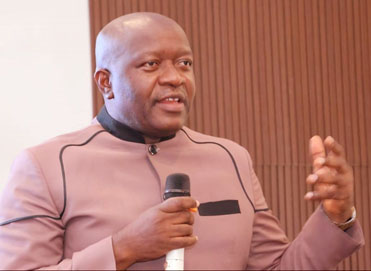
Ngafuan acknowledged that the current national budget remains significantly below the projected US$2–3 billion target, making the administration’s plan a difficult and long-term economic challenge.
Minister of Finance and Development Planning, Augustine Ngafuan, has projected that the country’s national budget could increase to (between) US$2 billion, and US$3 billion before the end of President Joseph Boakai’s first term.
A target many observers described as “ambitious amid worsening economic hardship.”
About the government’s economic outlook, Ngafuan said, the projected increase would be driven by stronger domestic revenue generation, improved tax collection, rising foreign investment and ongoing economic reforms the Boakai administration has implemented.
Ngafuan: “The government is focused on expanding economic opportunities, strengthening public financial management systems and restoring investor confidence in the struggling economy.”
He said, if the administration succeeds in implementing its reform agenda, Liberia could witness one of the largest budgetary expansions in its modern history, potentially creating room for increased development spending and public sector investments.
However, despite the optimism coming from the Ministry of Finance, many Liberians remain skeptical about whether such economic growth will directly improve the living conditions of ordinary citizens.
Critics argue that previous governments also promised economic transformation and improved public services, but many civil servants and low-income earners continue to struggle with poverty, unemployment, rising rent, and increasing school fees.
On that, Ngafuan acknowledged that the current national budget remains significantly below the projected US$2–3 billion target, making the administration’s plan a difficult and long-term economic challenge.
Economic analysts say, achieving such a massive increase would require sustained economic growth, political stability, aggressive anti-corruption measures, and major investments in key sectors, including mining, agriculture, infrastructure, and electricity.
Experts also warned that global economic uncertainty, inflation, exchange rate instability, and domestic fiscal challenges could slow progress toward the government’s target.
Some observers believe the government’s projection may appear unrealistic unless corruption within public institutions is seriously addressed and national resources are managed transparently.
Public reaction to the announcement has also exposed deep frustration among ordinary Liberians, who say, economic promises have not translated into better living standards for struggling families.
Several citizens argued that workers receiving take-home salaries of around US$100 to US$150 per month, cannot adequately support their families under the current economic conditions.
Liberians say, the rising cost of living continues to place enormous pressure on households already battling unemployment and limited economic opportunities.