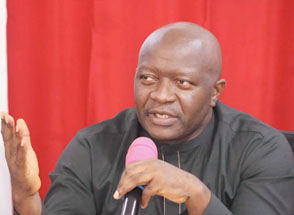
The Minister of Finance and Development Planning, Augustine Kpehe Ngafuan, has held a strategic engagement with officials of the Ministry’s Department of Budget and Development Planning to discuss ongoing reforms, operational challenges, and priorities for the country’s upcoming budget cycle.
The high-level meeting formed part of the government’s broader agenda to improve public financial management amid growing demands for greater transparency, accountability, and effective utilization of public resources.
During the engagement, Minister Ngafuan emphasized the importance of a well-coordinated budgeting process, noting that strong institutions remain critical to achieving the government’s development objectives and delivering essential services to citizens.
The discussions focused on institutional reforms, budget preparation mechanisms, and strategies aimed at enhancing efficiency within the Ministry.
Officials also reviewed challenges affecting budget implementation and explored ways to improve coordination among government agencies.
Liberia’s national budget has experienced significant growth in recent years.
The budget increased from approximately US$785 million in Fiscal Year 2023 to a record US$1.249 billion in Fiscal Year 2026, representing a nearly 59 percent increase over a three-year period.
The government is also seeking legislative approval for a draft supplementary budget valued at US$45 million.
If approved, total government spending for FY2026 would rise to approximately US$1.294 billion, according to projections from the Ministry of Finance and Development Planning.
Addressing staff during the meeting, Minister Ngafuan commended employees for their commitment and resilience in supporting government operations despite ongoing administrative and institutional changes within the civil service.
He explained that personnel adjustments being undertaken across government institutions are intended to promote greater efficiency, productivity, and merit-based performance within the public sector.
“We are working to ensure that our institutions function not merely as administrative centers, but as engines of national transformation,” Minister Ngafuan told ministry staff.
A key outcome of the engagement was the announcement that the government has officially reactivated the Budget Working Group (BWG), a technical body regarded as essential to strengthening coordination and policy alignment throughout the national budget preparation process.
The BWG is responsible for reviewing sectoral budget submissions, assessing expenditure ceilings, and ensuring that budget allocations are aligned with national priorities outlined under the ARREST Agenda for Inclusive Development (AAID).
Financial experts have long identified weaknesses in Liberia’s budget planning and implementation systems.
Previous assessments by international financial institutions highlighted recurring challenges, including delayed disbursements, procurement bottlenecks, and weak coordination among government agencies.
Reports have indicated that budget execution rates in some social sectors have historically ranged between 65 and 80 percent, raising concerns about the government’s ability to fully implement approved spending plans and achieve intended development outcomes.
Officials within the Ministry also called for more structured institutional engagement, recommending quarterly performance reviews between departmental heads and senior management.
The proposal is aimed at strengthening oversight, improving implementation monitoring, and enhancing accountability across departments.
Liberia’s public financial management framework has undergone several reforms since the post-war reconstruction period, particularly following the enactment of the Public Financial Management Act of 2009, which established stronger legal foundations for fiscal transparency and accountability.
Despite these reforms, governance and economic analysts continue to argue that strengthening institutional discipline and improving budget credibility remain critical challenges facing the country’s public sector.
The latest engagement comes at a time when Liberia is seeking to sustain projected economic growth driven largely by mining, agriculture, and infrastructure development.
Government officials believe stronger budget planning and execution will be essential to maintaining that growth trajectory.
Observers said the ultimate success of Liberia’s fiscal reform agenda will depend not only on the preparation of larger budgets but also on the government’s ability to convert approved appropriations into tangible improvements in infrastructure, public services, and economic opportunities for citizens.
As FY2027 national budget begin, attention is increasingly turning to the Ministry of Finance and Development Planning, which faces the challenge of balancing growing development demands, maintaining fiscal sustainability and meeting public expectations for improved service delivery across the country.