Boakai Affirms National Response To Drug Crisis
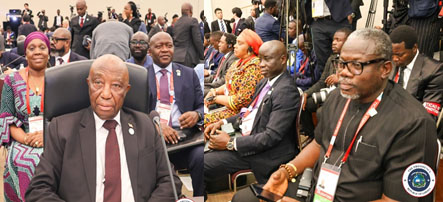
President Joseph Nyuma Boakai, has with immediate effect, declared or affirmed a “bold national response to drugs and illegal substances abuse crippling the country.
Boakai’s affirmation followed receipt of the progress report of the multisectoral steering committee on drugs and substance abuse.
He has therefore issued a special presidential statement announcing an “aggressive, multi-prong national anti-drug action plan” in response to the alarming surge of drug abuse and trafficking in the country.
Mr. Boakai described the proliferation of drugs as “an attack on our future” and reaffirmed his unwavering commitment to safeguard country’s youth, communities, and future generations from the scourge of substance abuse.
“We cannot allow the spread of illicit drugs to turn our children into victims, our communities into ghettos, and our neighborhoods into shelters for criminal elements,” the President declared.
He then commended the Liberia Drug Enforcement Agency (LDEA) for its
relentless efforts, and extended special recognition to the multisectoral steering committee on drugs and substance abuse for its coordinated work, highlighting the recent progress report submitted to his Office.
The President further lauded civil society groups and community organizations for raising their voices to increase awareness, draw attention to, and for taking a stand on this crucial national matter.
He meanwhile, urged Liberians to forge a concerted effort in strategizing concrete actionable steps in complementing government efforts in the fight against the emerging drug menace.
The newly announced national anti-drug action plan, to be implemented immediately, and in accordance with law, includes: seizure of properties linked to drug activities, including prosecution of landlords and accomplices.
Other plans are performance mandate for LDEA regional commanders with a six-month results deadline; national whistleblower program with cash rewards, and protection for informants; fast-tracking of drug cases through the courts with mandatory sentencing; expansion of rehabilitation centers and reintegration programs for recovering users.
The rest of the plans are to, investment in border surveillance, scanners, canine units, and security equipment; introduction of anti-drug curriculum in schools and random testing in high risk-areas; reinforcement of the national drug emergency, enabling raids and lockdowns where necessary; freezing of assets belonging to suspected traffickers in collaboration with
financial institutions; significant budget increases toward drug enforcement, education, and legal reforms.
Pres. Boakai emphasized that the fight against drugs will be “non-selective and
relentless,” stressing that, “no status, no title, no uniform, and no connection will protect anyone involved in drugs.”
Despite fiscal constraints, the President has directed country’s financial authorities to prioritize funding for: introduction of anti-drug curriculum in schools and random testing in high-risk communities; LDEA operational capacity and equipment, rehabilitation infrastructure and staffing; border and port security technologies; nationwide public education and prevention campaigns; legal and judicial sector reinforcements.
“The country will fund its own fight first,” Boakai affirmed, while also calling on donors and international partners to support the renewed national drive.
He meanwhile, appeal and further urged all Liberians from parents and educators to leaders and citizens, to join the fight: “Together, we will not just fight, we will win, we will not lose another generation to drugs, not under my watch.”