


By Gogift Harris
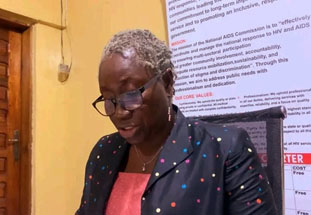
The Chairperson of the National AIDS Commission, Dr. Cecelia Nutah has disclosed how the country recorded approximately 2,900 new HIV infections, and 1,400 AIDS-related deaths in 2025.
The figures that raised concerns about the effectiveness of existing prevention, treatment, and public awareness interventions.
In the statistics, women account for the largest proportion of people living with HIV, with approximately 35,000 cases, followed by 17,400 men and 3,600 children.
The figures highlight the disproportionate burden of HIV among women, and raise questions about the availability of targeted prevention services, testing, treatment, and social protection for vulnerable populations.
The reported 2,900 new infections in a single year also point to persistent gaps in public health education, access to HIV testing, prevention services, and efforts to reduce new transmissions, particularly among young people.
The 1,400 AIDS-related deaths recorded in 2025 raise further questions about timely diagnosis, access to antiretroviral treatment, consistent medication availability, and the quality of care provided to people living with the virus.
Although Liberia has established institutions, and programs to address the HIV epidemic, the latest figures underscore the need to assess whether existing interventions have produced sufficient results to reduce infections, and prevent avoidable deaths.
The National AIDS Commission, and relevant health authorities are meanwhile, faced with the challenge to strengthen community-based awareness.
To expand voluntary testing, address stigma, and discrimination, and ensure that people living with HIV receive continuous treatment and support.
Public health observers may also question whether the resources allocated to HIV prevention, and treatment are adequate, particularly in communities where poverty, limited healthcare facilities, and inadequate access to medical services could discourage people from seeking testing and treatment.
As Liberia continues its response to the HIV epidemic, the 2025 figures present a public health concern that requires stronger accountability, increased investment
And measurable interventions to reduce new infections, prevent AIDS-related deaths, and improve the lives of the estimated 56,000 people living with HIV.
