


By Godgift Harris
“The budget leap came at a time ordinary Liberians have hankered for better roads, hospitals, schools, jobs and affordable living conditions,”—a critic remarked.
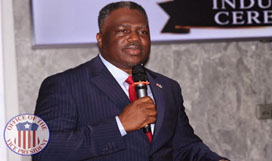
The Office of Vice President Jeremiah Kpan Koung is projected to receive a budget of US$5,501,813 for Fiscal Year 2027.
The money represents an increase from the US$4,409,153 approved for FY2026.
The budget leaps raised questions about government spending priorities, and the expected benefits to ordinary Liberians.
In the FY2027 draft national budget document, the proposed allocation represents an increase of approximately 24.8 percent at a time when many Liberians continue to struggle with unemployment, poverty, poor healthcare services, inadequate educational facilities, and limited economic opportunities.
The budget document outlines several responsibilities, and achievements of the Office of the Vice President, including strategic leadership, policy coordination, development oversight, and representing the President at national and international engagements.
However, the document provides limited measurable evidence of how these activities have translated into improved living conditions for citizens.
For FY2026, the Office reported involvement in road maintenance, rehabilitation, the Yellow Machines Program, energy-sector coordination, nutrition and food security initiatives, and engagement with development partners.
Yet, the budget presentation does not clearly quantify the direct impact of these activities, or identify specific communities that have benefited.
The Office also claims to have strengthened transparency, accountability, administrative leadership, and citizen engagement.
However, questions remain about the measurable results of these commitments, particularly how citizens can independently assess the effectiveness of the programs, and initiatives being coordinated.
Under the FY2027 objectives, the Office intends to expand opportunities for vulnerable groups, including persons with disabilities, through healthcare, vocational training, scholarships and empowerment initiatives.
It also plans to coordinate infrastructure, energy, economic development, and institutional reform programs under the government’s ARREST Agenda for Inclusive Development.
Despite these ambitious objectives, the budget document does not provide sufficient details on the number of beneficiaries expected, the specific communities targeted, implementation timelines, or measurable performance indicators.
Without such information, it may become difficult for lawmakers, and the public to determine whether the proposed spending will deliver tangible results.
A breakdown of the proposed expenditure shows that compensation for employees is expected to increase from US$2,332,712 in FY2026 to US$2,425,372 in FY2027.
Spending on goods and services is projected to rise considerably from US$1,744,064 to US$2,744,064, representing a major increase in operational expenditure.
Meanwhile, grants are projected to remain at US$152,000, while non-financial assets are maintained at US$180,377.
The increase in spending on goods and services raises questions about what specific operational activities require additional funding, and whether the proposed expenditure will produce measurable public benefits?
Although the Vice President’s Office plays an important constitutional role, including presiding over the Senate without the right to vote.
Critics are of the opinions that the expansion of its budget should be accompanied by stronger public accountability, transparent procurement, clear performance targets, and regular reporting on the use of public resources.
As the Legislature considers the FY2027 national budget, lawmakers must demand detailed explanations for the proposed increase, and ensure that public funds are justified by measurable results.
At a time when ordinary Liberians are demanding better roads, hospitals, schools, jobs and affordable living conditions.
The government institutions must demonstrate that increased allocations are delivering real improvements rather than simply expanding administrative expenditure.
