

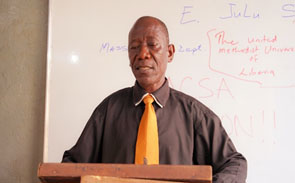

David K. Dahn, chairman of the Department of Mass Communication at the United Methodist University (UMU), has called for a holistic transformation of Liberians.
Dahn emphasized the need for citizens to change their ways of thinking, analyzing, classifying, and describing their leaders from disavows to words that will favor he nation.
He made the call on Tuesday, October 13, during a presentation in his Mass Communication 317 class.
During the lecture series, Dahn said, Liberia’s growth, and transformation require a fundamental shift in the mindset, and attitudes of its people.
Dahn: “Our development cannot be achieved through physical infrastructure and economic policies alone, but beginning with minds.”
He emphasized the importance of transforming the way Liberians think, evaluate leadership, and engage in constructive national discourse.
He wants Liberians to undergo cultural, political, and religious baptism; a comprehensive transformation of their attitudes, perspectives, and approaches to national issues, particularly in how they assess, and discuss individuals entrusted with leadership responsibilities.
Dahn’s message highlights the importance of responsible citizenship, constructive criticism, and objective analysis in building a progressive society.
His position suggests that national development requires citizens to move beyond unproductive criticism, and embrace informed discussions that contribute meaningfully to advance the country.
As Liberia continues to pursue development, and national progress, Dahn’s call serves as a reminder that meaningful transformation begins with the people themselves.
A change in mindset, values, and public engagement can help create an environment where leadership is assessed fairly, accountability is encouraged, and national interests are placed above personal differences.
Dahn’s remarks also underscore the role of higher education in shaping responsible citizens, and future leaders, who can contribute to the social, political, and economic development.
he also called for holistic transformation, which he said, presents an important message for students, media practitioners, political actors, and the general public.

Comments are closed.