At a time when many women and girls across Liberia continue to face the harsh realities of gender-based violence and harmful traditional practices, the Women NGO Secretariat of Liberia (WONGOSOL) is raising its voice with renewed urgency.
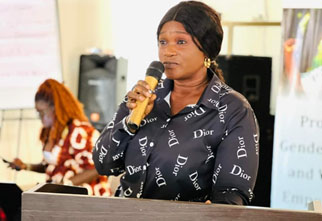
In an exclusive interview, the organization’s Executive Director, Madam Esther S. D. Eyeah David Yango, offered a candid reflection on both progress made and the challenges that remain in protecting and empowering women and girls nationwide.
For Madam Yango, the issue is not abstract, it is deeply rooted in the everyday experiences of Liberian women and girls.
“Protecting women and girls must be a national priority,” she stressed, emphasizing that safety, dignity, and equal opportunity should not be privileges, but rights guaranteed to every Liberian.
Speaking over the weekend at WONGOSOL’s office in Sinkor, where she outlined the organization’s first-quarter achievements for 2026, Madam Yango highlighted the critical role of partnerships in driving impact.
Working in collaboration with partners including UN Women Liberia, the National Democratic Institute (NDI), the Netherlands Institute for Multiparty Democracy (NIMD), the UN Trust Fund to End Violence against Women (UNTF), Irish Aid, and other national and international stakeholders, WONGOSOL has been able to expand its reach and deepen its interventions across multiple counties.
From rural communities to urban centers, the organization has been implementing initiatives aimed at creating space for women to lead and participate meaningfully in decision-making processes. One of the organization’s standout efforts has been engaging men as allies, training male leaders from six counties to support women’s leadership at both local and national levels.
“These are the people who influence decisions in their communities,” Madam Yango explained. “Bringing them into the conversation is key to changing attitudes and systems.”
In counties including Lofa, Margibi, Nimba, Bomi, Grand Bassa, and Grand Gedeh, superintendents, youth leaders, and traditional and religious figures have been brought together in places like Ganta and Tubmanburg for joint trainings with women leaders. These sessions, supported by partners such as UN Women and others are designed not only to build skills but also to foster collaboration and shared accountability.
Beyond leadership training, WONGOSOL is addressing the economic realities that often limit women’s choices. Through targeted capacity-building initiatives, including vocational training for 365 women, the organization is helping beneficiaries build sustainable livelihoods. Many of these efforts, supported by partners, specifically target single mothers and traditional female leaders, offering alternatives to harmful practices and creating pathways toward independence.
The organization’s work also extends to supporting survivors. Madam Yango disclosed that 15 survivors of sexual and gender-based violence have received assistance, including referrals to safe homes, an intervention made possible through coordinated efforts with partners and service providers.
At the policy level, WONGOSOL, with support from its partners, continues to monitor legislative activities and engage stakeholders, ensuring that communities better understand governance processes while holding leaders accountable. These efforts remain critical in a context where civic space is increasingly constrained and resources are limited.
Despite the progress, Madam Yango’s message remains clear: much more needs to be done.
She is calling for increased government investment, stronger political will, and sustained support for organizations on the frontlines of advocacy and service delivery.
“The cost of inaction is too high,” she warned.
For WONGOSOL and its partners, including UN Women, Kvinna till Kvinna, and UNTF, the path forward is rooted in collaboration, persistence, and a shared commitment to advancing the rights of women and girls across Liberia.