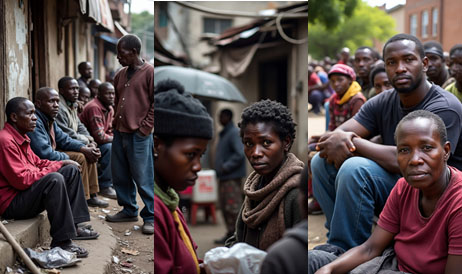
Poverty is more than empty pockets—it strips away dignity and forces people into survival mode.
When citizens are desperate, they sell their birthright: land, forests, iron ore, and even ports, often through long concessions like 66-year concessions to strangers or bad loans to foreign companies.
Hunger makes people vote for the undeserving, because a bag of rice or a campaign tshirt feels more urgent than morals.
Poverty doesn’t just weaken the economy—it auctions dignity.
Families carry the heaviest burden. Mothers, struggling to feed their children, may give daughters into early marriage or prostitution.
Men, pressured by society’s respect for money over honesty, turn to crime, fraud, or violence just to appear successful.
The rise of scams and “4G boys” is not only a moral issue—it is a symptom of a nation where poverty has stolen honor.
Hunger speaks louder than loyalty, and communities clap for the very leaders who exploit them, because silence is bought cheaply.
The damage poverty does to a nation is deep and lasting. It sells away resources, weakens institutions, and destroys hope for the future. But poverty can be fought.
A nation must value integrity over quick profit, protect its natural wealth for future generations, and build systems that reward honesty and hard work.
Poverty is not just an individual struggle—it is a national enemy. To defeat it is to restore dignity, justice, and the chance for a better tomorrow.