By: Yassah J Wright
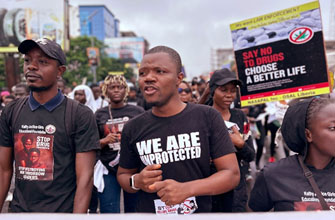
Renowned Liberian Human Rights Advocate, Titus B. Kpalah, has championed calls for an immediate systematic reform within the Liberian National Police (LNP), to address what he described as an unprofessional rule of engagement, human rights abuses and international misrepresentation.
Mr. Kpalah in an Op-ed title “Rethinking systemic reforms in LNP, an unpopular opinion” said that the conversation around rethinking police reform in Liberia often resurfaces after tragic incidents, public outrage, or international pressure.
But yet, he added that real lasting reform has remained elusive, while urging that If the government and country is serious about building a professional, accountable, and community-centered police force, then it is time to fundamentally rethink how police reform is addressed in Liberia.
The Liberian rights advocate stated that Liberians are often made to believe that the Police are less professional who conspire with notorious criminals to exploit from its citizens and as well survive on “traffic susu” (bribe in traffic).
According to him, these testimonies are either partially truth or potential fibs that intend to undermine the long-lasting service the LNP has contributed to Liberia’s post conflict reconstruction process and now.
He urged Liberians to reflect on how a police officer was wounded in Congo Town, the only repercussion was releasing eight live bullets in the chest, arms and legs of a mentally ill man, Matthew Mulbah that resulted in his fatal death.
Commenting on the importance for policing reform in Liberia, he disclosed that Liberia’s current position at the Security Council Non-permanent set, where its leaders are advocating for global security or justice on behalf of different countries while its police often work under poor conditions, low pay, lack of psychological support, inadequate technical trainings drives a disconnect between global demands for accountability and local progress.
“At the UN security council, Liberia is preaching multilateral cooperation, human rights norms and accountability, but when we compare the nation’s global struggle for peace and what it does at home will undermine our credibility as the oldest African Nation “that should have known better”. The police must treat disillusionment among citizens as a core spirit of democratic value and not as a weapon against the state, or some sort of revenge mechanism. Always attempting to inflate on these values will cripple the momentum to influence diplomatic ties and our global reputation,” he noted.
He lamented that they have heavily watched from far, international partners, donors, and civil society will likely demand more progress on good governance, transparency, rule of law, and human rights.
Mr. Kpalah warned that being on the Security Council can open more doors for support, but only if Liberia can show it is meeting those domestic expectations.
He stated that reform now does not necessary mean stripping a struggling officer off his job when citizens demand dismissal, it defines the country readiness to provide the adequate resources and technical capacity trainings for those service men and women.
“Liberia may be seen now as a country of peace but the true reality is, the nation is heavily divided from governance construct to citizens’ distrust. Utilizing a community centered-policing will build a stronger public confidence within the police, address over criminalization in less investigated crimes and give ownership to local communities. When communities are treated as partners in crime prevention, unity becomes a source of strength. In such a system, communities evolve into active watchdogs, enhancing safety and accountability at the grassroots level.” He concluded.