Railway Deal Sparks ‘Diplomatic Tensions’
By Godgift Harris
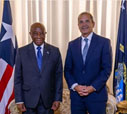
Just days before President Joseph Nyuma Boakai’s scheduled appearance at the African Leaders Summit in Washington, D.C., his administration is under fire for quietly signing a controversial multi-million-dollar railway deal with Ivanhoe Atlantic. Ivanhoe Atlantic is a U.S.-registered company linked to Chinese mining interests. The noise into the deal comes ahead of the Boakai-Trump Meeting in Washington, DC. The agreement was reportedly signed on Sunday, July 6, 2025, behind ‘closed doors’ at the National Investment Commission (NIC) on United Nations Drive. Although, government has already denied signing any document on Sunday, the deal Reportedly involves the rehabilitation and expansion of the country’s strategic railway corridor from Nimba County to the Port of Buchanan. The corridor is a vital export route for iron ore and has long attracted interest from major global mining players. Observers have drawn sharp comparisons between the current situation and events in 2006, when the then-Nigerian President Olusegun Obasanjo, faced U.S. pressure to surrender former President Charles Taylor before attending a critical White House meeting with President George W. Bush. Obasanjo complied, resulting in Taylor’s arrest and a significant geopolitical shift in the region. Now, Pres. Boakai is navigating similarly high-stakes waters, sources familiar with internal discussions at the Executive Mansion indicated that the deal with Ivanhoe Atlantic was accelerated to showcase the country’s commitment to infrastructure and foreign investment. However, its timing just before Boakai’s first high-level meeting with U.S. President John Donald Trump, has raised ‘diplomatic red flags.’ Ivanhoe Atlantic is believed to be the successor to High Power Exploration (HPX), a mining firm founded by Robert Friedland. Friedland also chairs Ivanhoe Mines, a Toronto-listed company partially owned by Chinese firms. Though Ivanhoe Atlantic is registered in Delaware, its connections to China’s state-linked enterprises have sparked concern among U.S. Africa policy experts and critics of Beijing’s growing influence across the continent. “This is a strategic miscalculation at a time when the U.S. is closely watching Chinese infrastructure expansion across Africa,” said a Washington-based Africa analyst, who spoke on condition of anonymity.
“If Liberia appears to be facilitating Chinese access to Guinean resources under the guise of a U.S.-branded deal, it could severely complicate U.S.-Liberia relations.” The deal reportedly includes provisions for the construction of new railway links extending into Guinea, enabling iron ore from Guinean concessions to be transported to the Liberian coast. Such cross-border infrastructure mimics China’s broader Belt and Road strategy and amplifies fears of Chinese encroachment cloaked in Western partnerships. Despite the scale and geopolitical implications of the railway agreement, the Boakai administration has yet to issue a formal statement. There was no public signing ceremony, no press release, and no legislative review—a move seen as a disregard for transparency and public accountability. Reporters initially invited to attend the signing on July 5, were later informed that the ceremony had been moved to the next day.
However, upon arrival at the NIC headquarters on July 6, media representatives were barred from entering, citing a sudden protocol shift.