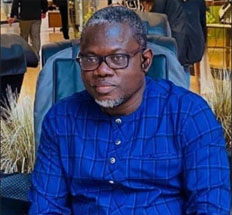
Minister of Information Jerolinmek Matthew Piah, has launched a blistering attack on former Liberia Council of Churches (LCC) President, Reverend Korto Brown, accusing the outspoken cleric of showing “no respect for government officials.”
Mr. Brown is the bishop of the Virginia-based Water in the Desert Apostolic Pentecostal Church International.
Mr. Piah’s sharp reaction comes in the wake of Rev. Brown’s comments branding senior officials of the Joseph Nyuma Boakai-led administration as “mean” remarks that have sparked controversy within both political and religious circles.
“Korto Brown has no respect for government officials, if he wants to be a politician, he should leave the pulpit, and join the political arena where he can be addressed as such,” Piah declared, dismissing the criticism as “irresponsible and politically motivated.”
He did not stop there. He openly questioned Rev. Brown’s credibility and leadership record during his tenure at the LCC, alleging that the Korto “failed to make any meaningful impact.”
“The United Methodist Church is currently engulfed in conflict, has he said anything about it as a former president of the council? What was his legacy,” Piah rhetorically asked.
In a move many observers say crossed into personal attack, Piah also disparaged Rev. Brown’s local congregation, suggesting that the church had failed to grow or expand.
“He should be thinking about improving his church and winning souls for Christ rather than insulting public officials.
Even his members are reportedly not paying their dues. What moral authority does he have?” Piah retorted.
Rev. Brown, widely known for his outspoken views on governance, corruption, and social justice, has consistently criticized Liberian leaders for ‘mismanagement and neglect of citizens’ welfare.’
His latest remarks appear to have struck a nerve within the Boakai administration, prompting defensive counters from government’s circle.
Piah went further, casting suspicion on the political ambitions of religious leaders who, in his view, hide behind the pulpit while advancing partisan agendas.
He pointed to the current president of the LCC, who contested as a vice-presidential candidate in the last elections, as an example of blurred lines between the church and politics.
The escalating war of words highlights a growing rift between the Boakai administration and critical voices within the religious community.
Analysts say government’s aggressive tones toward Rev. Brown raises troubling questions about freedom of expression, and whether clerics should remain confined to spiritual matters or continue to act as moral watchdogs in national governance.
For now, Rev. Brown has not responded to Minister Piah’s stinging rebuke, but ordinary Liberians are already voicing concern that rather than addressing pressing governance issues, senior officials are using national platforms to trade insults with “respected clergy.”
The controversy underscores a broader national debate: should Liberia’s faith leaders silence their criticism of government, or should they be encouraged to serve as voices of conscience in a country still grappling with corruption, disunity, and weak leadership?