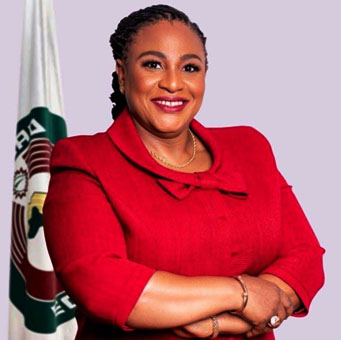
“Liberia and the sub-region are gradually losing the fight against drugs and substance abuse.”
The Resident Representative of the Economic Community of West African States (ECOWAS) to Liberia, Ambassador Josephine Nkrumah, has warned the entire sub-region of a catastrophic.
Madam Nkrumah warning cams as the result of “limited attention to the fight against drugs and youth rehabilitation.”
Her spoke on Monday, September 15, 2025, when she appeared on a local radio phone-in program in Monrovia.
“Liberia and the sub-region are gradually losing the fight against drugs and substance abuse.”
Madam Nkrumah therefore, recommended a “holistic and inclusive efforts void of politics, or else, the fight would fail.”
“When we lose our youth, we are losing them in the troops. We will be heading for a danger. I strongly believe that when we talk about drug abuse, our efforts to fight the menace should be void of politics. All of us should come on board. There is nobody who is listening to me in Liberia that is not attached by this one way or the other. You may have family, relatives or friends, and so, we are all attached,” she told her audience.
Madam Nkrumah further called on the government and citizens to be intentional about the rehabilitation and detoxification of at-risk youth, branding “Liberia’s youth as having potential.”
She also provided an update on ECOWAS’ involvement, and contribution to the fight against drugs and substance abuse in Liberia and the subregion.
Madam Nkumah said the Region recently launched the Social Protection framework, which places key emphasis on vulnerable community and persons, including drugs dependents.
Madam Nkrumah: “ECOWAS has political deceleration that was made as far back as 2008, which cataloged a model Drug Law formulation based on the Supplementary Act on Drug Prevention, but I don’t think it has been ratified by many African countries. It looks at drugs prevention, trafficking and addiction, while addressing it as a region.”
She warned that it is important to rehabilitate the drug-addicted youth, but most importantly, it should follow with career, and skills development to make them self-employed or job ready employed; something she said, they have realized as key.
Madam Nkrumah said Liberia is not the only country that is affected with the drug addiction crisis, but almost all the countries in West Africa are losing potential youthful manpower to drug and substance abuse.
“I am not sure we are winning the war against drugs. I think more and more, we are seeing youth, who are falling to drugs. We must begin to look at drug abuse not so much as a criminal offense, but more as a cancer that is eating out society and try to find a way to rehabilitate drug dependents. The criminalization of the dependent is not winning the fight against drugs. We believe in embracing and supporting drug dependents,” she said.
She meanwhile, recommended standardized drug rehabilitation and detoxification center, “because it’s key to determining the success, alarming that in Liberia, there is complex adoption of method to drug rehabilitation.”
Madam Nkrumah called for a national standardized protocol and procedures for institutions that seek to work in such areas.
She added: “People need to be more and more worried, because Africa is now seen as a destination for drug trafficking and transit points.
Madam Nkrumah sees amazing potential in Liberian youth, but a population that is hungry for success, and the opportunity to do good things, sometimes they lack the needy guidance.
“We need to invest in our youth a lot more. I am happy that with the relocation of some of the ECOWAS institutions, Liberia has been chosen to host the ECOWAS Youth and Sports Development Center. I think that brings a lot of potential to the country. This is important to understand the youth,” she noted.