By Godgift Harris
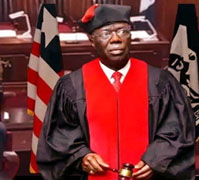
Chief Justice Yamie Quiqui Gbeisay, has ignited national debate over the state of the judicial infrastructure after submitting a comprehensive blueprint for the construction of a new Supreme Court complex to President Joseph Nyuma Boakai.
The move, described by legal analysts as both bold and overdue, highlights the judiciary growing struggle to function within a facility that was designed for a much smaller population, and a simpler legal system.
The current Supreme Court building, located at the Temple of Justice on Capitol Hill, has long been criticized for its limited capacity, poor working conditions and outdated facilities.
In his submission, Chief Justice Gbeisay, spoke of the rising population and expanding judicial caseload demand a modern, purpose-built structure capable of hosting the Supreme Court, and other key judicial departments.
The proposed blueprint, according to sources familiar with the plan, envisions a multi-court facility with digital courtrooms, improved security, and public access systems aimed at boosting transparency and efficiency.
The proposal has drawn strong support from the National Bar Association (LNBA) to the extent that during the opening of the October Term of Court, Bornor M. Varmah called on both the Executive and Legislature to back the judiciary modern efforts.
“The current Temple of Justice is no longer fit for this purpose,” Cllr. Varmah declared, “If we expect justice to serve a nation of five million people, we must give our courts the environment, tools, and dignity they deserved.”
He warned that continued neglect of judicial infrastructure could undermine public confidence in the courts and weaken the rule of law a sentiment echoed by several lawyers in attendance.
In his address marking the official opening of the Supreme Court October Term, Pres. Boakai lauded the Chief Justice vision and pledged his administration’s support for judicial independence and reform.
“Our citizens have legitimate concerns about delays in trials, transparency in proceedings and the perception that justice sometimes bends under influence,” the President admitted.
“These concerns demand courageous and genuine reform.”
Pres. Boakai, while reaffirming his commitment to improving judicial conditions, also urged accountability within the system.
He cautioned that any reform must come with measurable outcomes — faster trials, ethical judges, and fair rulings.
Critics, however, see the new building proposal as only one piece of a much larger puzzle.
Judicial observers argue that the crisis within Liberia’s justice system extends far beyond infrastructure touching on corruption, political interference, and lack of access to justice for ordinary citizens.
“The building is not the problem it’s the people who work inside it,” said one retired judge who requested anonymity.
“If the new court is to mean anything, it must come with a new culture of integrity, independence, and accountability.”
Others warn that without proper legislative backing, the project could fall victim to the same bureaucratic stagnation that has crippled previous judicial reform efforts. Liberia’s courts, they argue, need more than walls they need trust.
Chief Justice Gbeisay’s proposal, nonetheless, has rekindled national conversation about the state of justice in Liberia.
His vision includes not only physical reconstruction but systemic reform decentralizing justice delivery, digitalizing court records, and enhancing case management.
Legal experts say this approach could finally begin to dismantle the perception that Liberia’s courts serve the powerful at the expense of the powerless.
“The call for a new Supreme Court is symbolic,” noted one legal analyst.
“It represents the Judiciary’s desire to rebuild itself not just in structure, but in spirit.”
As Liberia continues to grapple with corruption, weak institutions, and public distrust, the debate surrounding Chief Justice Gbeisay’s proposal stands as a litmus test for the country’s commitment to the rule of law.
For now, the blueprint rests with the Executive Mansion is awaiting approval, funding, and political will.