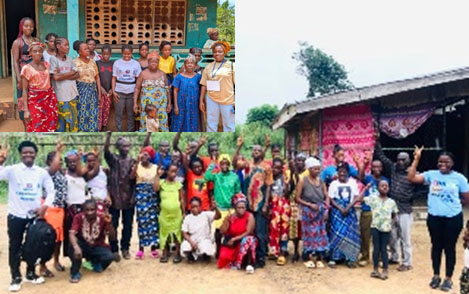
Efforts to promote transparency, accountability, and inclusive governance have gained momentum with the rollout of a nationwide initiative.
The initiative supported by the United Nations Development Programme (UNDP), and the United Nations Peacebuilding Fund (PBF).
The project, implemented by Naymote Partners for Democratic Development, is titled: “Empowering Citizens and Communities to Foster Social Accountability and Transparency in Governance and Public Service Delivery.”
It has already trained and deployed 75 Social Accountability Monitors in the 15 counties.
Working through County Accountability and Advocacy Teams (CAATs), the monitors are engaging communities to track development projects, assess public service delivery, and encourage citizen participation in decision-making processes.
Between June and August, 2025, CAATs monitored 375 development projects nationwide, of which 80 percent (300 projects) remain active.
This is an indication of ongoing government investment in infrastructure and social services.
The initiative also engaged over 2,100 citizens through community forums and consultations with 125 county officials, producing independent monitoring reports now gaining recognition among both citizens and government institutions.
“We are aware of Naymote’s work and the transparency of their reports about government commitments,” said Lofa County Education Officer, Momoh S. Kamara.
Mr. Kamara: “We want CAAT to monitor Ministry of Education (MoE) projects so our people can be informed and hold us accountable.”
Similarly, District Agriculture Officer A. Calvin Tubah, welcomed the initiative. Tubah: “The Ministry of Agriculture (MoA) is doing many projects across the county, but CAAT has tracked none. Their reports will add value to our work and inform citizens of our impact.”
However, the monitors have highlighted challenges, including delays in project implementation, weak contractor performance, limited access to documentation and low citizen involvement in project planning.
In Maryland County, Pomuken Public School, is staffed by just one volunteer teacher for 40 students. The school lacks benches, blackboards, textbooks, latrines, and safe drinking water.
“We’ve been forgotten for too long,” said resident Sarah Wesseh of Karluway District. Politicians come during elections with promises, but nothing changes. Our children deserve better schools, roads, and healthcare.”
Similar shortcomings were reported in Gbarpolu and Bong counties, where magisterial courts are yet be repaired, and in Lofa County, where sections of Voinjama Multilateral High School remain in poor condition.
CAAT’s presence has also elevated public engagement, through radio talk shows,
community dialogues, and forums, citizens are becoming more proactive in demanding accountability.
“Before CAAT, we did not know how county funds were used,” said James Kollie, a youth leader in Bong.
“Now we attend forums, ask questions, and follow projects. It is empowerment.”
The project also employs ComCare, a digital monitoring tool that collects gender-sensitive data on public spending and service delivery.
Findings are shared with local authorities and county councils alongside practical recommendations.
The initiative is funded by the United Nations Peacebuilding Fund, and facilitated by UNDP Liberia in collaboration with Naymote Partners for Democratic Development.
This marks a significant step toward strengthening citizen-led governance and advancing country’s democratic accountability.