MoJ Trains Community Leaders
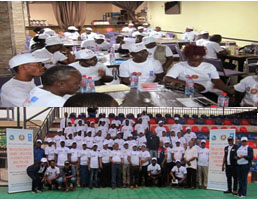
The Ministry of Justice (MoJ), through its Alternative Dispute Resolution (ADR) Section, has trained 120 leaders.
The training, according to a release, is a bold step toward fostering peace and advancing grassroots access to justice.
The trained community leaders, included traditional chiefs, magistrates, police officers, and community representatives.
The trainees were drawn from Sinoe and Nimba counties to serve as “professional ADR practitioners.”
With funding from Irish Aid and supported by the United Nations Development Programme (UNDP), the intensive training took place over two, three-day sessions in Greenville, Sinoe County, and in Ganta, Nimba County.
It brought together 60 participants in each region.
The initiative marks a significant chapter in the country’s national push to equip local leaders with culturally grounded, fair, and accessible conflict resolution skills.
It was part of the broader “Strengthening Rule of Law” program under the UN Joint Rule of Law framework, which empowers state and non-state actors to advance justice and community stability.
The MoJ, the release said, facilitated the training sessions focusing on the country’s dual justice systems, and practical dispute resolution techniques tailored for local contexts.
ADR Director Gobah A. Anderson, represented the Minister of Justice, Counsellor N. Oswald Tweh.
Anderson underscored the importance of community-based justice.
“Every Liberian, regardless of gender, tribe, or status, deserves access to free, fair, timely, and culturally grounded conflict resolution,” said Anderson.
He reaffirmed the ministry’s commitment to scaling the ADR program nationwide and championing its passage by the Legislature as part of a national strategy to expand access to justice, ease trial court backlogs, reduce overcrowding in prison facilities, and ensure that it becomes a pillar of community-level justice in the country.
“This program empowers community leaders to become effective and efficient in informal dispute mechanisms. We’ve worked hard to formalize ADR in the country’s rule of law framework, and are hopeful the Act will be passed soon,” Anderson noted.
Topics covered during the workshops, included “Access to Justice, the Coexistence of Customary and Statutory Legal Systems, and Practical ADR Techniques Tailored for Local Contexts.
Participants are expected to serve as justice ambassadors, bringing transformative skills to local disputes, promoting healing over hostility, transforming conflict-prone areas into communities of peace, and restoring public confidence in local justice.
These leaders will serve as neutral and trusted mediators, promoting peaceful resolution and reducing violence and crime in their communities.
Through their leadership, the country moves closer to a future where peace is a norm and justice is shared by all.
The ADR initiative introduces out-of-court settlement options led by trusted community figures such as chiefs, elders, and religious leaders, reinforcing peaceful alternatives to litigation, and empowering them to resolve disputes, including felony cases, at the grassroots level.
The National ADR Act aims to formalize these mechanisms to ease court dockets, reduce prison overcrowding, and empower grassroots mediators.
This multi-stakeholder effort reflects the country’s commitment to building an inclusive, culturally responsive justice system rooted in the knowledge and leadership of its people.