FY2026 Budget Preparation Launched
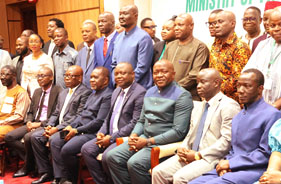
The Ministry of Finance and Development Planning (MFDP), has officially launched the Fiscal Year (FY) 2026 Budget Preparation Process.
The launch was followed by a call for government spending entities to arrange their priorities.
It also signifies the commencement of the critical first phase of the national budget formulation, adhering to the framework established by the amendment and restatement of the Public Financial Management (PFM) Act and Regulations of 2009.
At the launch on Tuesday, July 15, 2025, in Monrovia, Finance Minister, Augustine K. Ngafuan said, the Executive Branch of government intends to continue on the path that they started last year.
The last year exercise contained the submission of the draft national budget to the legislature on or before October 31, 2025.
Ngafuan said, by doing so, it will ensure that the budget is pass before the next fiscal year, adding: “last year was a historic feat, because it was the first time in many years that the national budget was passed before the start of a new fiscal year.”
“Critically,” he said: “the FY2026 budget preparation process guidance ensures direct alignment with the government’s flagship development strategy, the ARREST Agenda for Inclusive Development (AAID).”
“This year, we intend to meet all the timelines, and by law, the budget is to be table at the legislature not later than October 31, and we in the executive intend to meet that deadline,” said Ngafuan.
He recalled that last year started with some difficulties in terms of revenue underperformed projection, but they were able to surpassed the projection, as the 2024 budget ended with a little supple.
Mr. Ngufaun assured the public that the government is doing all it can to raise the revenue projector as they were able to raised nearly US$700 million in domestic revenue in 2024, adding that government is close to meeting the billion dollars target.
He said the early articulation of national priorities, policy objectives and fiscal targets, aim to enhance performance-based budgeting, thereby, he called on all government spending entities to best arrange their priorities when executing their budget-line.
Mr. Ngafuan: “The approach is intended to reinforce the government’s unwavering commitment to transparency, accountability and results-driven public finance management. The number of developments that are currently taking place across the country in terms of roads, agriculture, infrastructure are testaments of a good leadership, as the government will continue to allocate more resource to institutions that performing well.”
“Let me be clear here that even if we met the one-billion-dollar target, issues of scarcity will remain, the entities will still complain that they have not being adequately budgeted for. But their complain is positive, because it represents transition, which they want to do more. We will try to capacitate your ambition just as we’ve planned,” Ngafuan.
MFDP Deputy Minister for Budget and Development Planning, Tanneh G. Brunson said, the event serves to inform all government spending entities about the procedures, and planning processes essential for preparing the FY2026 national budget, thus highlighting the release of the Budget Call Circular 1 (BCC 1).
Madam Brunson said, the critical document provides comprehensive guidance to all government ministries, agencies, and commissions (MACs) on preparing their strategic plans, programs and preliminary budget proposals.
“The forthcoming FY2026 Draft Budget will mark the fifth national budget to be formulated under the country’s reformed fiscal year cycle (January 1-December 31), and represents third budget to be developed under the current administration,” she said.
Madam Brunson continues: “Issued under Section 17 of the Amended PFM Act, and Section 15 and 16 of the Amended PFM Regulations, BCC 1 meticulously outlines the timetable and instructions for preparing and submitting the Budget Framework Paper (BFP) and the draft national budget for the fiscal period spanning 2026-2028.”
The document also includes indicative ceilings for both recurrent and capital expenditure, a detailed FY2026 budget calendar, and specific instructions on prioritizing spending withing available resources. Macpherson C. Marbiah writes/0886442881-0777250370
Join our affiliate community and maximize your profits—sign up now! https://shorturl.fm/L3OsQ
Join our affiliate community and maximize your profits! https://shorturl.fm/lU7Sp