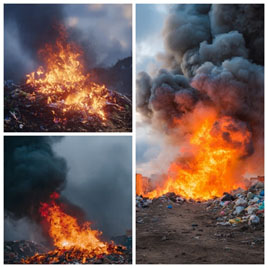
Burning dirt, often a desperate practice in communities without proper waste management, reflects the fragile relationship between human activity and the environment. In modern cities, especially those on the outskirts or suburbs, inadequate waste disposal systems force residents to resort to unsafe methods of handling refuse. When piles of dirt, mixed with plastics, paper, and organic waste, are set on fire, the immediate effect is smoke that pollutes the air. This smoke contains harmful particles that settle on homes, crops, and water sources, creating longterm health risks.
The environment suffers in multiple ways. First, burning dirt releases carbon dioxide and soot, contributing to climate change and poor air quality. Second, toxic chemicals from plastics and other materials seep into the soil, reducing fertility and contaminating groundwater. Third, the practice destroys biodiversity, as small organisms in the soil are killed, disrupting natural cycles.
In suburban areas where city authorities fail to provide adequate waste management, the problem becomes more visible. Residents, lacking alternatives, burn waste to clear space or reduce foul odors. Yet this shortterm solution creates longterm damage. Children inhale polluted air, rivers become contaminated, and communities face higher risks of respiratory diseases.
The reflection is clear: burning dirt is not just a local act of survival—it is a mirror of weak urban planning and poor environmental stewardship. Cities that neglect waste management push their suburbs into harmful practices, and the environment responds with pollution, degraded land, and declining public health.
Burning dirt is not a solution; it is a symptom of weak urban planning and poor waste management.