
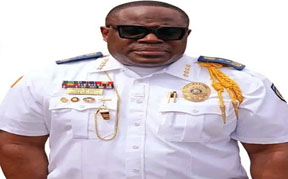

Inspector General of Police Gregory O. W. Coleman has urged officers of the Liberia National Police (LNP) to enforce the law without fear or favor, declaring that no individual is above the law. However, concerns over alleged selective enforcement, motorcycle confiscations, and police conduct are raising questions about the impartiality of law enforcement in Liberia.
IGP Coleman made the statement Saturday, November 7, 2026, during a meeting with heads of various operational divisions at Police Headquarters on Capitol Hill in Monrovia.
He emphasized professionalism, discipline, impartiality, respect for human rights and adherence to the rule of law.
The Police Chief commended officers for their efforts in maintaining peace, combating crime and protecting lives and property despite operational challenges.
While welcoming the reported reduction in violent crimes, Coleman expressed concern over road traffic accidents and directed the Traffic Division to intensify enforcement of traffic regulations and road safety awareness.
Coleman also ordered an immediate halt to commercial vending in designated areas where overhead bridges are under construction along Tubman Boulevard, particularly from Zone three Police Station toward the ELWA Boulevard Junction.
The directive, according to the police, is intended to protect vendors and road users from construction-related hazards, with violators facing possible arrest and confiscation of goods.
Despite the IG’s call for impartial law enforcement, some Liberians have expressed concerns that police actions are allegedly targeting certain individuals, including members and supporters of opposition political parties.
These concerns have fueled questions about whether the police are consistently applying the law across political and social groups.
Joseph Davis, a private security guard, told journalists that police officers have been confiscating motorcycles even when riders reportedly present their identification cards.
His account raises concerns about the procedures officers follow during enforcement operations and whether citizens are adequately informed of the legal grounds for such actions.
Some officers of the Monrovia City Police (MCP) have also reportedly complained about their treatment by LNP personnel.
One MCP officer alleged that they were directed by a commander to retrieve a motorcycle from the Slipway Police Depot, but the situation reportedly required intervention from a senior official at Police Headquarters before the motorcycle was released.
According to another source, a similar incident allegedly involved a member of the Armed Forces of Liberia (AFL) from the barracks sector who was traveling to a program.
The source claimed that despite presenting military identification, the individual was instructed to have the motorcycle confiscated.
The situation reportedly escalated when other AFL personnel arrived at the Slipway Depot, allegedly creating a confrontation with police officers.
Journalists have also reportedly complained about their treatment by police commanders at the Slipway Police Depot in central Monrovia, further raising concerns about relations between law enforcement officers and members of the media.
While the LNP maintains that its enforcement actions are intended to strengthen public safety and promote proactive policing, the reported incidents underscore the need for transparency, accountability, and consistent application of the law.
As Coleman calls on officers to enforce the law without fear or favor, members of the public are increasingly demanding that the police demonstrate the same impartiality in practice.
The central question remains whether the LNP can uphold its commitment to professionalism while addressing allegations of arbitrary enforcement and misconduct.
