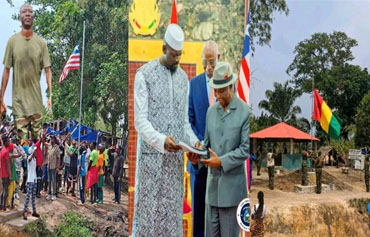
Critics argue that by prioritizing the removal of a controversial lawmaker, government risks being perceived as “indifferent to the plight of citizens living in contested areas.”
A troubling question continues to echo in Lofa County and beyond as to who truly controls the Makona River border between Liberia and Guinea?
The question arose as members of the 55th Legislature conclude its special session President Joseph Nyuma Boakai convened.
What should have been a session focused on urgent national matters such as the printing of new banknotes, and passage of a supplemental budget, was instead overshadowed by the removal of Representative Yekeh Y. Kolubah.
Kolubaah’s outburst remarks on the growing tension at the Makona River appeared to have triggered a political storm, diverting attention from an escalating border crisis.
Now that Kolubah has been expelled from legislative proceedings, many Liberians are asking whether his removal has solved anything.
On the ground, reports suggest otherwise, border reality vs. political narrative.
In towns and villages along the Makona River in Lofa County, the situation remains tense and uncertain as residents continue to call for government intervention.
Some residents say, Guinean soldiers are still present in areas long considered Liberian territory, while Liberian security forces appeared distant and largely inactive.
Local radio stations have become the primary outlet for frustrated residents, many of whom described daily “hardship and fear as factors for the ensuing crisis.” Callers from Lofa recounted stories of restricted movement, economic disruption, and a growing sense of abandonment by central authorities.
For these communities, the issue is not political rhetoric, but survival.
“If the lawmaker is gone, does that mean the soldiers have also gone. Because we still see them here,” one caller reportedly asked during a recent broadcast.
Equally troubling is the lack of clear communication from the Liberian government regarding its engagement with Guinea.
There has been little public update on bilateral talks or concrete steps to de-escalate the border crisis.
The silence has fueled speculation that the focus in Monrovia may have been less about resolving the border dispute, and more about containing internal political dissent.
Critics argue that by prioritizing the removal of a controversial lawmaker, government risks being perceived as “indifferent to the plight of citizens living in contested areas.”
Others see it as part of a broader pattern in Liberian politics, where political battles in the capital often overshadow urgent national security concerns.
The debate has also exposed deeper questions about political culture.
Supporters of the government have defended the action against Kolubah.
They argued that “discipline within the Legislature is necessary.”
However, opponents view it as an attempt to silence criticism.