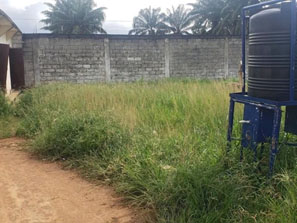
The David Kuyon Sports Stadium, Bong County’s only major sporting facility, and once regarded as one of the finest county stadiums, has fallen prey to overgrown grass.
The stadium has rapidly fallen into disrepair as overgrown grass and poor maintenance continue to consume sections of the venue.
The situation has raised questions about the management of the stadium ahead of this year’s National County Sports Meet.
An In profile daily newspaper investigation, has established that large portions of the stadium have become overgrown with grass, making some sections difficult to access, and diminishing the appearance of a facility that once proudly hosted the National County Sports Meet.
Residents and sports enthusiasts say, the deteriorating condition reflects years of neglect despite the stadium’s continued use for football matches, public events and other activities.
The investigation further found that stadium management, headed by Bong County Finance Officer, Silas Tokpa, has reportedly failed to maintain the facility, while continuing to collect fees from organizations and institutions using the venue.
Sources familiar with the stadium’s operations claim that event organizers are charged no less than US$100 for games, and other public programs, yet little visible investment has been made toward cleaning, grass cutting, or routine maintenance.
The worsening condition has sparked criticism from sports stakeholders, who argue that the stadium is steadily losing the standard it once enjoyed.
They warned that if immediate action is not taken, the county risks presenting an embarrassing image when it hosts Group ‘B’ of this year’s National County Sports Meet.
Community members say the stadium, once celebrated as one of the cleanest sporting facilities, has now become “a field of grass,” with neglected surroundings replacing the vibrant atmosphere that previously attracted athletes and supporters.
Observers have questioned how revenue generated from the facility has been utilized.
They called for greater transparency in the management of funds collected from users of the stadium.
They also argued that a venue generating regular income should not be left to deteriorate while basic maintenance remains visibly absent.