By Godgift Harris
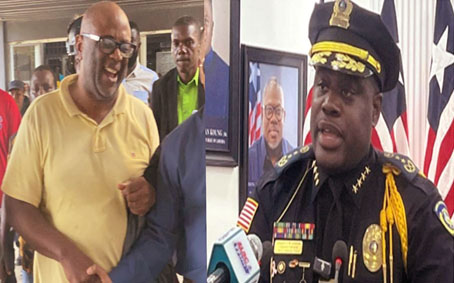
Public concern is intensifying over what many observers describe as “selective justice” in the handling of sexual offense cases involving senior government officials.
One concern raised has to do with the instantaneous way in which the Liberia National Police (LNP) forwarded suspended National Security Agency (NSA) officer Peter Bon Jallah to court without a publicly disclosed DNA test.
Jallah is accused of sodomizing a 15-year-old boy, a case that has drawn nationwide attention, because of its gravity and the profile of the accused.
Critics are now demanding that Police Inspector General, Gregory O. W. Coleman, explain whether a DNA test was conducted before the Jallah sodomy case was sent to court, and if not, why such a critical investigative step was omitted?
Legal practitioners and human rights advocates argue that “DNA testing” is a standard evidentiary tool in sexual offense cases, particularly those involving minors, and its absence raises questions about the thoroughness, fairness, and consistency of police investigations.
The controversy has revived public memories of a previous high-profile case involving Bryant McGill, an official at the Ministry of Youth and Sports, who was accused in a rape case involving a 16-year-old girl.
At the time, Coleman repeatedly told press conferences that McGill was “warned” and that CCTV footage did not capture evidence implicating him.
Police insisted on the lack of sufficient proof, and McGill was never prosecuted.
Today, McGill has reportedly returned to work, and continues to enjoy full government benefits, though the President said, he suspended him.
The victim has faded from public attention.
Advocates continue to ask what became of the teenager’s case, her psychological wellbeing, and her future in her community and school environment.
“This is where the credibility of the justice system is at stake,” one civil society activist said.
“In one case involving a powerful official, the police said the absence of evidence, which appeared cautious.
In another case, also involving a senior official, the suspect is rushed to court without a DNA test.
The public deserves answers.
The contrast between the two cases has fueled accusations of “unequal treatment before the law,” with critics asking whether justice depends on the identity of the accused rather than the facts of the case.
More troubling to observers is the apparent inconsistency in investigative standards.
In the earlier case involving a 16-year-old girl, police reportedly demanded extensive proof, including scientific evidence.
In the current case involving a 15-year-old boy, no DNA test has been publicly acknowledged, yet prosecution has proceeded.
Human rights groups stress that sexual violence cases regardless of the gender of the victim must be handled with the same rigor, professionalism, and transparency.
They warn that any perception of compromise or bias not only undermines public trust, but also discourages victims from coming forward.
As Peter Bon Jallah faces court proceedings, pressure is mounting on the LNP to clarify its investigative process, disclose whether forensic evidence was collected, and explain the apparent disparity between similar cases involving government officials.
For many, the central question remains unanswered: “Are all citizens truly equal before the law, or is justice selectively applied depending on power and position?”