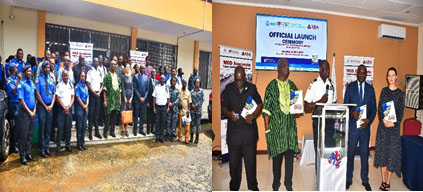
Liberia Revenue Authority (LRA) has launched it national Time Release Study (TRS) Report 2026. The launch of the report signified that Liberia has taken a major step toward faster, more efficient cargo clearance and a more competitive trading environment.
The report was launched in collaboration with the Ministry of Commerce, the World Customs Organization (WCO), and key public and private sector stakeholders.
The second time-release study conducted was the first report aligned with the World Customs Organization’s internationally recognized methodology. It marks a significant milestone in the customs modernization agenda. Unlike the first study, the assessment was conducted in accordance with the WCO’s global methodology, enabling Liberia to benchmark its cargo clearance performance against international standards while identifying practical opportunities to improve border efficiency and facilitate trade. The Time Release Study is an internationally recognized WCO Trade Facilitation tool used by customs administrations worldwide to determine the actual time taken to clear goods from arrival to exit from a port. By measuring every stage of the clearance process, it helps identify operational bottlenecks and provides objective, evidence-based recommendations to improve customs performance cross-border trade. The study assessed 670 import declarations and examined the entire cargo clearance process at the Freeport of Monrovia from vessel arrival to the release of goods. LRA Commissioner General James Dorbor Jallah, described the report as “much more than a technical assessment.” Dorbor said, the report provides Liberia with a credible benchmark for measuring performance and driving continuous improvement. “The Time Release Study report gives us an internationally recognized baseline for understanding where delays occur, and where reforms must be targeted. This is not a report that will sit on a shelf; it is a roadmap for action that will strengthen transparency, efficiency, and predictability in the trade environment.” The study, Jallah said, found that importers currently spend an average of 12 days, 19 hours, and 42 minutes clearing cargo at the port. While customs inspections and exit gate procedures performed relatively efficiently, the study identified the principal causes of delay as manual processes, fragmented institutional coordination, and paper-based payment verification. The findings provide clear evidence for prioritizing reforms across customs and other agencies to improve efficiency, predictability, and service delivery. The study was conducted in line with the World Customs Organization’s methodology, the National Time Release Study fulfills Liberia’s obligations under the World Trade Organization Trade Facilitation Agreement and reinforces the country’s commitment to evidence-based reforms that simplify border procedures, reduce trade costs, strengthen customs performance, and enhance regional competitiveness.