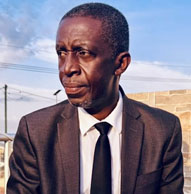
A Commentary by Tiawan Saye Gongloe, a Victim of the Month of April
April is a sacred month. It calls to mind sacrifice, suffering, and redemption.
Yet for Liberia, April also carries a painful memory—one written not only in faith, but in blood.
On April 14, 1979, unarmed citizens raised their voices in protest. They were met with tear gas and bullets. Lives were lost—officially forty, though many believe the number was far greater.
On April 12, 1980, a civilian President was brutally murdered by soldiers assigned to protect him at the Executive Mansion—men entrusted with his safety, including his own bodyguards.
In the days that followed, thirteen cabinet ministers were lined up and executed by firing squad on April 22, 1980.
Some government officials were detained at the Post Stockade and Camp Belleh Yallah—then dreaded maximum security prisons in Liberia.
Many women—family members and associates of government officials—were subjected to rape, humiliation, and, in some cases, death.
And on April 6, 1996, political disagreements among leaders of warring factions turned Monrovia into a battlefield, bringing death, destruction, and lasting trauma to innocent people.
These are not just dates. They are warnings.
They remind us that violence is not a solution. It has never solved Liberia’s problems. It only delays solutions, deepens wounds, and leaves generations to bear the consequences.
My own life bears testimony to the dangers of this path. On April 3, 1978, I was arrested and jailed as one of six student leaders for opposing the declaration of a national holiday for a one-hour visit of President Jimmy Carter to Monrovia, when no such holiday had been declared in Nigeria, where he had spent three days.
On April 24, 2002, I was again arrested, detained, and severely tortured in police custody on the direct order of the President of Liberia.
These experiences have taught me never to forget the month of April—and never to accept violence as a means of resolving differences.
We must remember the victims—those who lost their lives, those who were injured, and those who disappeared and remain missing to this day. Their silence speaks louder than words. Their absence is a call to conscience.
Liberians must now choose a different path. Our disagreements—political or otherwise—must be resolved through dialogue, law, and mutual respect.
The gun cannot build a nation. Violence cannot create justice. Only peace, guided by the rule of law, can move Liberia forward.
My plea to all Liberians is simple and urgent: April must no more be a month of sorrow and savagery in our country.
If we truly honor the past, we must learn from it. I will continue to work for peace so that no Liberian will ever experience what so many have suffered—and what I myself have endured—during this month.
Liberians, beware—April must never bleed again.