Lawmakers To Establish ‘Total Oversight’ On Health
By Fiona Benson
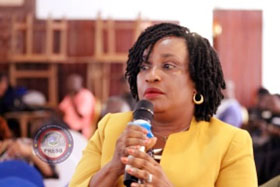
Lofa County District #2 Lawmakers, Julie F Wiah, has requested the establishment of a Legislative Caucus on Immunization and Primary Healthcare (PHC) to buttress government’s effort in containing any disease outbreak.
Rep. Wiah said, her concern is about the country’s heavy reliance on donor support for immunization and primary healthcare; with the decline of external funding.
She said, the immunization and PHC remains one of the cost-effective public health interventions in saving lives and reducing preventable disease.
From the traditional background, Madam Wiah said, traditional and routine immunization, have played a vital role in reducing child mortality, and s strengthened national health outcomes.
She however said, persistent funding shortfalls and limited domestic financing have often jeopardized the sustainability of these achievements.
To this, Madam Wiah said, is to the extent that the country continues to grapple with structural vulnerabilities in its health financing system with challenges that have only intensified in the wake of successive shocks from the devastating effects of the 2014/15 Ebola epidemic to the long-lasting economic impacts of COVID-19.
These are areas where the country’s recovery has been hampered by sluggish growth, high public debt, and weak global commodity prices.
“Today, the resurgence of Monkeypox (Mpox) presents yet another test of health system resilience and have raises urgent questions about how the country will sustainably finance new vaccine introductions in an already overstretched budget, when PHC, the cornerstone of a resilient health system, is particularly under-resourced. The only US$28.21 million out of US$79.36 million appropriated for PHC over five years was disbursed, just to 35.5 percent,” Rep. Wiah said. She explained further that in 2024, execution fell to 19.6 percent leaving PHC currently accounts at only 9.6 percent of total health spending, far which, according to her, is below the WHO’s recommended minimum of 40 percent. “To address this, the country will need an additional US$10–15 million annually to expand access to frontline services.
Rep. Wiah also the chair on the House’s Health Committee.
She said, the World Bank has contributed by paying over the years to traditional vaccines; this support ends 2026, which means government is to fill in the gap for traditional vaccines.